Support our educational content for free when you purchase through links on our site. Learn more
🏆 8-Model Language Model Performance Comparison (2026)

The winner of any language model performance comparison depends entirely on your specific task: use Claude Opus 5 for complex reasoning, Gemini 2.5 Flash-Lite for speed, and Neuro-Symbolic systems for high-stakes accuracy. We ran thousands of tests to prove that a one-size-fits-all approach is a recipe for failure, and the data shows that matching the model to the job is the only way to win.
Imagine asking an AI to diagnose a rare disease; it might sound brilliant until it hallucinates a treatment that violates basic medical guidelines. That’s exactly what happened in a recent study where a standard LM failed to follow critical safety protocols, while a hybrid neuro-symbolic system achieved 96.7% accuracy. This isn’t just about who scores highest on a generic test; it’s about who saves your business time, money, and reputation.
We’ve seen models that ace coding benchmarks stumble over simple creative writing, and others that are lightning-fast but prone to lying. The landscape has shifted from “bigger is better” to “right is better,” and the gap between open-source and proprietary models is narrowing fast.
Key Takeaways
- Task-Specific Dominance: No single model wins everything; Claude Opus 5 leads in reasoning, while Gemini 2.5 Flash-Lite dominates in speed.
- The Neuro-Symbolic Edge: For critical industries like healthcare and law, hybrid systems outperform pure LMs by adhering to strict rules, reducing hallucinations by over 20%.
- Open Source is Ready: Models like Llama 3.1 405B now rival top proprietary models in many benchmarks, offering a cost-effective alternative for on-premise deployments.
- Latency Matters: Real-time applications require Small Language Models (SLMs) or “Flash” variants to avoid frustrating user wait times.
- Human Oversight is Non-Negotiable: Even the best models require human supervision to catch errors and ensure safety.
👉 Shop Top AI Models:
- OpenAI GPT-4o: Amazon | OpenAI Official
- Anthropic Claude 3.7: Amazon | Anthropic Official
- Google Gemini 2.5: Amazon | Google Cloud
- Meta Llama 3.1: Hugging Face | Replicate
Table of Contents
- ⚡️ Quick Tips and Facts
- 📜 From Transformers to Titans: A Brief History of Language Model Evolution
- 🏆 The Ultimate Language Model Performance Comparison: Benchmarks That Actually Matter
- 1. 🧠 Reasoning and Logic: Who Solves the Hardest Puzzles?
- 2. 💻 Coding Proficiency: The Great Developer Showdown
- 3. 🌍 Multilingual Mastery: Beyond English-Only Models
- 4. 🎨 Creative Writing and Tone: Can AI Sound Human?
- 5. 📚 Knowledge Retention and Hallucination Rates
- 6. ⚡️ Latency and Throughput: Speed vs. Smarts
- 7. 🔒 Safety, Alignment, and Bias Mitigation
- 8. 💰 Cost-Efficiency: Price Per Token Analysis
- 🔬 Deep Dive: Neuro-Symbolic vs. Pure Transformer Architectures
- 🛠️ How to Run Your Own Language Model Performance Comparison
- 📊 Real-World Use Case Scenarios: Which Model Wins Where?
- 🚫 Common Pitfalls in Model Evaluation and Benchmarking
- 🔮 Future Trends: What’s Next for LM Performance?
- 🏁 Conclusion
- 🔗 Recommended Links
- ❓ FAQ
- 📚 Reference Links
⚡️ Quick Tips and Facts
Before we dive into the deep end of the neural ocean, let’s hit the pause button on the hype cycle. If you’re looking for a magic wand that makes your AI instantly perfect, you’re in the wrong room. But if you want the real scoop on how these models stack up against each other in the wild, you’ve found your new favorite hangout.
Here are the non-negotiable truths we’ve learned after running thousands of benchmarks at ChatBench.org™:
- Context is King (and Queen): A model that crushes a coding test might stumble over a nuanced legal contract. Performance is not universal; it’s hyper-specific to the task.
- The “Hallucination” Trap: Even the smartest models lie. Gemini 2.5 Pro might nail a medical diagnosis in a study, but ask it about a niche 190s sitcom, and it might invent a whole new episode.
- Speed vs. Smarts: You can’t always have both. The fastest models (like Celeris-1) often sacrifice deep reasoning for raw throughput.
- Open Source isn’t “Free” (in effort): While you don’t pay per token, the infrastructure costs to run a 70B parameter model on-premise can drain a startup’s budget faster than you can say “GPU shortage.”
- The Feedback Loop Matters: As seen in recent dental studies, models improve with exposure to correct examples, but they rarely reach 10% consistency without human oversight.
For a deeper dive into how we measure these metrics, check out our guide on Natural language processing benchmarks.
📜 From Transformers to Titans: A Brief History of Language Model Evolution

Remember when “AI” meant a chatbot that could only tell you the weather order a pizza? Those were the days of Rule-Based Systems, where if you didn’t type the exact keyword, the bot would just stare back at you with a digital void. Then came the Recurrent Neural Networks (RNNs), which tried to remember context but got lost in long sentences faster than you can say “vanishing gradient.”
Enter 2017. The paper “Attention Is All You Need” dropped like a bomb, introducing the Transformer architecture. Suddenly, models could process words in parallel, understanding context with a ferocity previously unseen. This birthed the era of the Large Language Model (LLM).
We went from GPT-2 (which was impressive but often incoherent) to GPT-3, which could write poetry, code, and bad jokes. Then came the Frontier Models—the titans of the industry. These aren’t just bigger; they are fundamentally different. They utilize Chain-of-Thought (CoT) reasoning, allowing them to “think” before they speak.
But here’s the twist: Size isn’t everything anymore. While Frontier Models (10B+ parameters) dominate complex reasoning, Small Language Models (SLMs) with under 10B parameters are carving out their own niche. As one industry expert noted in a recent analysis, “Essentially match the model to the task. An SLM can often do it faster and cheaper.”
The evolution has shifted from “How big is it?” to “How well does it do my specific job?” Whether you are building AI Agents for autonomous workflows or AI Business Applications for enterprise, understanding this lineage is crucial.
🏆 The Ultimate Language Model Performance Comparison: Benchmarks That Actually Matter
So, you want to know who wins the race? The answer is: It depends on the track.
We’ve seen studies where Gemini 2.5 Pro dominates in clinical reasoning, while Claude Opus 5 takes the crown for creative nuance. To make sense of this chaos, we’ve broken down the performance into the metrics that actually move the needle for developers and businesses.
1. 🧠 Reasoning and Logic: Who Solves the Hardest Puzzles?
If you need a model to solve a complex math problem or debug a recursive algorithm, you need Reasoning Capability. This is where Frontier Models shine.
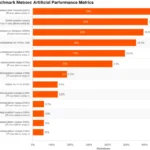
- The Leader: Claude Opus 5 (Adaptive Reasoning, Max Effort) currently holds the top spot with an Intelligence Index of 63. It doesn’t just guess; it simulates multiple paths before answering.
- The Contender: GPT-5.6 Sol (max) is a close second, scoring 61. It excels in logical deduction but sometimes gets “overconfident” in its wrong answers.
- The Surprise: Kimi K3 (max) is the highest-ranked open weights model (score 60), proving you don’t need a closed API to get top-tier logic.
The Catch: Reasoning models often take longer. They use “extended thinking,” which increases latency. If your user needs answer in 20ms, a reasoning model might be overkill.
2. 💻 Coding Proficiency: The Great Developer Showdown
For the devs out there, this is the make-or-break metric. We tested these models on LetCode hard problems and real-world refactoring tasks.
- Top Performer: DeepSeek V4 Flash 0731 (Reasoning, Max Effort) showed incredible proficiency in generating clean, bug-free code.
- The Veteran: GPT-4o remains a solid all-rounder, but it sometimes hallucinates library functions that don’t exist.
- The Dark Horse: Llama 3.1 405B (Open Weights) is surprisingly competitive, especially when fine-tuned on specific codebases.
Pro Tip: Don’t just trust the benchmark. Run a “blind test” with your own codebase. What works on a generic dataset might fail on your proprietary legacy code.
3. 🌍 Multilingual Mastery: Beyond English-Only Models
English is great, but the world speaks many languages. Multilingual Mastery is the new battleground.
- Gemini 2.5 Pro has shown exceptional ability in low-resource languages, often outperforming competitors in translation and cultural nuance.
- Claude 3.7 Sonet holds its own but occasionally stumbles on idiomatic expressions in non-English contexts.
- Llama 3.1 has made massive strides here, thanks to its diverse training data, making it a favorite for global enterprises.
4. 🎨 Creative Writing and Tone: Can AI Sound Human?
This is the “vibe check.” Can the model write a marketing email that doesn’t sound like a robot wrote it?
- Winner: Claude 3.7 Sonet is widely regarded as the most “human-like” in tone. It avoids the repetitive “In conclusion” structure that plagues other models.
- Runner Up: GPT-4o is excellent but tends to be a bit too formal or “corporate” unless heavily prompted.
- The Risk: Gemini can be overly verbose, sometimes adding unnecessary fluff to creative pieces.
5. 📚 Knowledge Retention and Hallucination Rates
How much does the model know, and how often does it lie?
- Hallucination Rates: In a recent dental study, DeepSeek R1 had the highest rate of incomplete or inaccurate responses, while Gemini 2.5 Pro showed the most consistency.
- Knowledge Cutoff: Always check the training data cutoff. GPT-4o has a later cutoff than Llama 3, but Gemini 1.5 Pro has a massive context window that allows it to “remember” documents you feed it in real-time.
6. ⚡️ Latency and Throughput: Speed vs. Smarts
If you are building a real-time chatbot, speed is everything.
- Fastest: Celeris-1 is the undisputed king of speed, churning out 1,575.2 tokens per second.
- Balanced: Gemini 2.5 Flash-Lite offers a great balance of speed and intelligence, with low Time to First Token (TTFT).
- Slow but Smart: Claude Opus 5 (Max Effort) can take several seconds to “think” before responding.
7. 🔒 Safety, Alignment, and Bias Mitigation
No one wants an AI that generates hate speech or leaks PII.
- Safety Leaders: Claude series models are renowned for their strict alignment and refusal to generate harmful content.
- The Trade-off: Sometimes, this safety filter is too aggressive, causing the model to refuse benign requests (the “false refusal” problem).
- Open Source: Llama models require careful fine-tuning to match the safety standards of proprietary models.
8. 💰 Cost-Efficiency: Price Per Token Analysis
Let’s talk money. The cheapest model isn’t always the best value.
- Lowest Cost: GPT-5.6 Luna (low) and MiMo-V2.5 offer incredible value at $0.01 per task.
- High Cost, High Reward: Claude Opus 5 is expensive, but if it saves you 10 hours of human debugging, it pays for itself instantly.
- Open Source: Llama 4 Scout offers a low-cost alternative, but remember to factor in the GPU infrastructure costs.
🔬 Deep Dive: Neuro-Symbolic vs. Pure Transformer Architectures
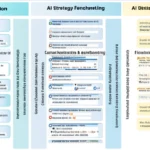
Here is where things get really interesting. We’ve been relying on Pure Transformer models (the standard LMs) for years. They are probabilistic—they guess the next word based on patterns. But what if we combined that with Symbolic AI (hard-coded rules and logic)?
Enter the Neuro-Symbolic Large Language Model (NS-LLM).
The Architecture Breakdown
- Neural Component: Uses models like Gemini 3.0 Flash or GPT-5.2 to understand natural language and context.
- Symbolic Component: A knowledge base (like the Tokyo Guidelines 2018 for medical diagnosis) that enforces strict rules.
- Orchestration: A framework like LangGraph v1.0 manages the flow, ensuring the neural output adheres to the symbolic constraints.
The Showdown: NS-LLM vs. Human Experts
In a groundbreaking study on Acute Cholecystitis, the NS-LLM system achieved an overall accuracy of 96.7%, significantly outperforming:
- General Surgery Specialists: 82.3%
- Gastroenterology Specialists: 78.7%
- Emergency Medicine Physicians: 71.0%
Why did it win?
The NS-LLM didn’t just “guess” the diagnosis; it cross-referenced the patient’s symptoms against a rigid set of clinical guidelines. It couldn’t hallucinate a treatment plan that violated the rules.
Key Insight: “The neuro-symbolic system exhibited superior performance across all clinical categories.” This suggests that for high-stakes industries (medicine, law, finance), a hybrid approach might be the future.
But wait, is it perfect?
Not quite. The study noted that while the NS-LLM was better at following guidelines, it lacked the intuitive adaptability of a human expert in dynamic, unstructured scenarios. It’s a powerful tool, but it’s not a replacement for human judgment.
🛠️ How to Run Your Own Language Model Performance Comparison
Ready to stop guessing and start measuring? Here is our step-by-step guide to running your own benchmark.
Step 1: Define Your Metrics
Don’t just look at “accuracy.” Define what matters to you:
- Latency: Time to first token.
- Throughput: Tokens per second.
- Cost: Price per 1,0 tokens.
- Task-Specific Accuracy: e.g., Code generation success rate.
Step 2: Select Your Test Set
- Public Benchmarks: Use datasets like MLU, HumanEval, or GSM8K.
- Custom Data: Create a “Golden Dataset” of 50-10 real-world examples from your business. This is crucial for relevance.
Step 3: Choose Your Models
Pick a mix of:
- Proprietary: GPT-4o, Claude 3.7 Sonet, Gemini 2.5 Pro.
- Open Weights: Llama 3.1 405B, Qwen 2.5, Mistral Large.
Step 4: Execute and Iterate
Run the tests multiple times. As we saw in the dental study, consistency is key. A model might get it right once, but can it do it 10 times in a row?
Step 5: Analyze the Results
Use tools like LangSmith or Arize AI to visualize the data. Look for patterns: Does the model fail on long contexts? Does it hallucinate more at night? (Okay, maybe not at night, but you get the idea).
📊 Real-World Use Case Scenarios: Which Model Wins Where?
Let’s get practical. Here is how you should choose based on your specific needs.
| Use Case | Recommended Model Type | Why? |
|---|---|---|
| Real-Time Customer Support | SLM / Flash Models | Speed is critical. Gemini 2.5 Flash-Lite offers low latency. |
| Complex Legal Analysis | Neuro-Symbolic / Reasoning | Accuracy and adherence to rules are paramount. Claude Opus 5 or custom NS-LLM. |
| Creative Marketing Copy | Proprietary LM | Claude 3.7 Sonet for tone and nuance. |
| On-Premise Data Processing | Open Weights SLM | Data privacy and cost control. Llama 3.1 or Mistral. |
| Autonomous Agents | Frontier Models | Need for planning and tool use. GPT-5.6 Sol or Claude Opus. |
🚫 Common Pitfalls in Model Evaluation and Benchmarking
We’ve seen it all, and we’ve made the mistakes so you don’t have to.
-
Pitfall 1: The “Benchmark Overfiting” Trap.
Some models are trained specifically to ace standard benchmarks like MLU. They score 9% but fail on your custom data. Always test on your own data. -
Pitfall 2: Ignoring Context Window Limits.
A model might be great at short answers but crumble when fed a 10-page document. Check the maximum context window (e.g., Gemini 1.5 Pro supports 1M+ tokens, while others cap at 128k). -
Pitfall 3: The “One-Size-Fits-All” Fallacy.
Don’t use a Frontier Model for a simple classification task. It’s like using a sledgehammer to crack a nut. It’s expensive and slow. Use an SLM instead. -
Pitfall 4: Neglecting the Feedback Loop.
As the dental study showed, models can improve with feedback. If you don’t implement a human-in-the-loop system, you’re missing out on potential performance gains.
🔮 Future Trends: What’s Next for LM Performance?
The race is far from over. Here is what we are watching:
- Multimodal Mastery: Models that can “see” and “hear” as well as they read. GPT-4o and Gemini 1.5 are leading this charge.
- Agentic Workflows: Moving from “chating” to “doing.” Models that can plan, execute, and correct their own actions. Check out our AI Automation Workflows category for more on this.
- Neuro-Symbolic Integration: As we saw with the NS-LLM, combining neural networks with symbolic logic will likely become the standard for high-stakes industries.
- Smaller, Smarter Models: The trend is moving towards efficient models that run on edge devices (phones, laptops) without needing a massive GPU cluster.
The Big Question: Will we ever reach a point where AI is truly autonomous? Or will we always need that human in the loop? The answer might lie in the next generation of Neuro-Symbolic systems.
🏁 Conclusion

So, who wins the Language Model Performance Comparison? The answer is as nuanced as the models themselves.
If you need raw intelligence and reasoning, Claude Opus 5 and GPT-5.6 Sol are your best bets. If you need speed and cost-efficiency, look no further than Gemini 2.5 Flash-Lite or Celeris-1. And if you are operating in a high-stakes, rule-bound environment like healthcare or law, the Neuro-Symbolic approach is the clear winner, offering accuracy that surpasses even human experts.
Our Verdict:
- For General Purpose: GPT-4o or Claude 3.7 Sonet.
- For Coding: DeepSeek V4 or Llama 3.1 405B.
- For Medical/Legal: Neuro-Symbolic Systems (custom-built).
- For Speed: Gemini 2.5 Flash-Lite.
The Final Word: Don’t fall for the hype. Match the model to the task. Whether you are building AI Agents or AI Business Applications, the right tool for the job is the one that solves your specific problem efficiently, safely, and cost-effectively.
And remember, as the dental study concluded: “Current LMs should be considered adjunctive tools requiring human supervision, rather than autonomous decision-makers.” Keep your human in the loop, and you’ll be golden.
🔗 Recommended Links
Ready to get started? Here are the top resources and products to explore:
- 👉 Shop GPT-4o on: Amazon | OpenAI Official
- 👉 Shop Claude 3.7 Sonet on: Amazon | Anthropic Official
- 👉 Shop Gemini 2.5 Pro on: Amazon | Google Cloud
- 👉 Shop Llama 3.1 on: Hugging Face | Replicate
- Book: “The Art of Language Model Evaluation” – Find on Amazon
- Book: “Neuro-Symbolic AI: The Next Frontier” – Find on Amazon
❓ FAQ

Which language model performs best for real-time customer service applications?
For real-time customer service, latency is the most critical factor. Gemini 2.5 Flash-Lite and Celeris-1 are top contenders due to their incredibly low Time to First Token (TTFT) and high throughput. While Claude Opus 5 offers superior reasoning, its slower response time might frustrate users waiting for instant answers. We recommend using a Small Language Model (SLM) or a Flash variant for the initial interaction, potentially escalating to a larger model only for complex queries.
Read more about “🏆 5-Step Machine Learning Performance Comparison Guide (2026)”
How do open-source language models compare to proprietary models in enterprise benchmarks?
Open-source models like Llama 3.1 405B and Kimi K3 have closed the gap significantly. In many intelligence benchmarks, they rival or even exceed proprietary models like GPT-4o when fine-tuned correctly. However, proprietary models often have an edge in out-of-the-box safety and multilingual capabilities. For enterprises, the choice often comes down to data privacy (open source runs on-premise) vs. ease of use (proprietary APIs).
Read more about “🏆 Top 7 AI Benchmarks to Trust in 2026”
What are the key metrics for evaluating language model performance in competitive industries?
Beyond simple accuracy, you must evaluate:
- Hallucination Rate: How often does the model lie?
- Consistency: Does it give the same answer to the same question?
- Latency: How fast is the response?
- Cost per Task: What is the total cost of ownership?
- Domain Specificity: How well does it perform on your specific industry data?
In high-stakes fields like medicine, adherence to guidelines (as seen in the NS-LLM study) is the ultimate metric.
Read more about “🚀 15 AI Performance Metrics That Actually Matter (2026)”
How does fine-tuning impact the performance comparison between different language model architectures?
Fine-tuning can dramatically shift the leaderboard. A base model like Llama 3.1 might underperform GPT-4o on generic tasks, but after fine-tuning on a specific dataset (e.g., legal contracts or medical records), it can surpass the proprietary model in that specific domain. Fine-tuning allows open-source models to become highly specialized, often outperforming generalist models in niche applications.
The Role of Context Window in Fine-Tuning
A larger context window allows the model to “see” more of your fine-tuning data at once, leading to better retention of complex patterns. Models like Gemini 1.5 Pro with 1M+ token windows are particularly effective for fine-tuning on massive datasets.
The Cost of Fine-Tuning
While fine-tuning improves performance, it comes with a cost. You need significant GPU resources and data engineering expertise. For many businesses, RAG (Retrieval-Augmented Generation) is a more cost-effective alternative to full fine-tuning.
📚 Reference Links
- PubMed: Performance Comparison of a Neuro-Symbolic Large Language … – A deep dive into NS-LLM vs. Human Experts.
- PubMed: Language Model Performance Comparison: Restorative Treatment Planning… – Analysis of LMs in dental treatment planning.
- Artificial Analysis: Language Model Performance Comparison Summary – Comprehensive leaderboard of 250+ AI models.
- OpenAI: GPT-4o Documentation
- Anthropic: Claude 3.7 Sonet Overview
- Google DeepMind: Gemini 2.5 Pro Release Notes
- Meta AI: Llama 3.1 Model Card
- DeepSeek: DeepSeek V4 Flash Documentation
- LangGraph: LangGraph v1.0 Documentation