Support our educational content for free when you purchase through links on our site. Learn more
🚀 5 Steps to AI Model Comparison for 2026 Dominance

Imagine walking into a boardroom where your competitors are still guessing which AI tool to buy, while you present a data-backed roadmap that slashed operational costs by 30% and doubled your innovation output. That isn’t a fantasy; it’s the reality for organizations that master the art of AI model comparison. In a landscape where new models drop weekly, the “best” model is a moving target, and blindly adopting the latest hype can lead to expensive failures.
We’ve seen companies burn millions on models that hallucinate in critical scenarios or fail to scale, simply because they skipped the rigorous benchmarking phase. But here’s the secret: comparison isn’t just about picking a winner; it’s about finding the perfect fit for your unique data, budget, and risk tolerance. From healthcare diagnostics to high-frequency trading, the difference between market leadership and obsolescence often comes down to a single metric you overlooked.
In this deep dive, we’ll walk you through our proven 5-step framework used by top engineers to evaluate models like GPT-4o, Claude 3.5, and Llama 3. We’ll reveal how to build a “Golden Dataset” that exposes hidden flaws, how to calculate the true cost of latency, and why the most expensive model is often the worst choice for your specific industry. By the end, you’ll have the blueprint to turn AI from a costly experiment into your most powerful competitive edge.
🎯 Key Takeaways
- Strategic Alignment: The “best” AI model doesn’t exist; the right model is the one that perfectly aligns with your specific business objectives, data architecture, and latency requirements.
- Rigorous Benchmarking: Success requires moving beyond generic leaderboards to create domain-specific evaluation datasets that test for accuracy, safety, and real-world performance.
- Cost vs. Performance: Optimizing your AI stack involves balancing latency, accuracy, and cost, often revealing that smaller, specialized models outperform massive generalists for specific tasks.
- Future-Proofing: Building a model-agnostic architecture allows organizations to adapt quickly to rapid technological shifts without being locked into a single vendor.
- Risk Mitigation: Systematic comparison identifies hallucinations, bias, and security vulnerabilities before deployment, protecting your brand reputation and bottom line.
Table of Contents
- ⚡️ Quick Tips and Facts
- 🕰️ The Evolution of AI: From Hype to Strategic Necessity
- 🧠 Why AI Model Comparison is the New Competitive Edge
- 🛠️ The Ultimate Guide to Benchmarking AI Models for Business
- 🏭 Industry-Specific Use Cases: Where Model Comparison Drives Innovation
- 🏥 Healthcare: Precision Diagnostics vs. Generalist Models
- 💰 Finance: Fraud Detection and Algorithmic Trading Benchmarks
- 🛒 Retail & Ecommerce: Personalization Engines and Inventory Forecasting
- 🏭 Manufacturing: Predictive Maintenance and Quality Control
- 🚚 Transportation & Logistics: Route Optimization and Autonomous Systems
- ⚖️ Navigating the Trade-offs: Performance vs. Cost vs. Ethics
- 🚧 Overcoming Implementation Bariers in AI Adoption
- 🤖 Generative AI in Action: Real-World Case Studies of Model Selection
- 🔮 Future-Proofing Your Strategy: Adapting to Rapid Model Iterations
- 🎯 Key Takeaways: The Path to AI-Driven Dominance
- ❓ Frequently Asked Questions (FAQs) on AI Model Comparison
- 🎓 Earn Your Master’s Degree in AI and Data Science
- 📈 Increased Efficiency & Productivity Through Smart Model Selection
- 📊 Enhanced Decision-Making & Data Analysis Capabilities
- 😊 Improved Customer Experience via Tailored AI Solutions
- 💡 Innovation & Competitive Advantage in the AI Era
- 💸 Cost Reduction & Return on Investment (ROI) Analysis
- 🔒 Scalability, Flexibility & Safety in Enterprise AI
- 🌍 Global Impact: AI in Sustainability and Smart Cities
- 🛡️ Cybersecurity & Surveillance: The Double-Edged Sword of AI
- ⚖️ Ethical Considerations and Bias Mitigation Strategies
- 👥 Will AI Make Most HR Functions Irelevant in the Near Future?
- 🏁 Conclusion
- 🔗 Recommended Links
- 📚 Reference Links
⚡️ Quick Tips and Facts
Before we dive into the deep end of the AI model comparison ocean, let’s grab a life jacket and look at the map. You might think comparing AI models is just about picking the one that writes the best haikus, but it’s actually the difference between a business that scales and one that stalls.
Here are the hard truths you need to know right now:
- The Efficiency Gap: According to Syracuse University’s iSchool, AI-powered customer support agents handle 13.8% more inquiries per hour than traditional methods while improving work quality by 1.3%. That’s not just a bump; that’s a competitive moat.
- The Strategy Void: A staggering 43% of organizations cite a lack of a clear AI strategy as their primary barrier to entry. Don’t be that company.
- The Talent Shortage: 42% of businesses struggle with a shortage of skilled professionals. This is why model comparison is critical—you need tools that are intuitive enough to bridge the talent gap.
- The ROI Reality: Supply chain and inventory management see the highest revenue increases (>5% growth) from AI adoption, according to McKinsey.
- The Consumer Shift: In the hospitality sector alone, 89% of travelers want to use AI for future trip planning. If you aren’t comparing models to serve them, you’re already losing.
Pro Tip: Don’t just look at the “smartest” model. Look for the model that fits your specific data architecture and latency requirements. A super-intelligent model that takes 10 seconds to respond is useless for a real-time trading bot.
For a deeper dive into how to structure this comparison, check out our comprehensive guide on AI Model Comparison right here at ChatBench.org™.
🕰️ The Evolution of AI: From Hype to Strategic Necessity
Remember the days when “AI” meant a chatbot that could only answer “Yes” or “No” to a menu? Those days are gone, buried under the avalanche of Generative AI and Large Language Models (LLMs).
We at ChatBench.org™ have watched this evolution from the trenches. It started with rule-based systems (think: if X, then Y), moved to machine learning (learning from data), and now we are in the era of foundation models that can reason, create, and hallucinate with equal confidence.
But here’s the twist: The technology is moving faster than the strategy.
Many organizations are rushing to adopt the “shiniest” model without asking: Does this actually solve my problem?
“Your job will not be taken by AI. It will be taken by a person who knows how to use AI.” — Christina Inge
This quote from a Harvard DCE blog perfectly encapsulates the current shift. It’s no longer about having AI; it’s about comparing, selecting, and deploying the right AI.
Why Comparison is the New Currency
In the past, you bought software and hoped it worked. Today, you have hundreds of models (OpenAI’s GPT-4o, Anthropic’s Claude 3.5, Google’s Gemini, Meta’s Llama 3) competing for your attention.
- The “One-Size-Fits-All” Myth: There is no single “best” model. A model that excels at creative writing might fail miserably at logical reasoning or code generation.
- The Cost of Wrong Choices: Deploying a massive, expensive model for a simple task is like using a sledgehammer to crack a nut. It burns cash and slows you down.
- The Innovation Trap: Without rigorous comparison, you might adopt a model that creates bias or security vulnerabilities, leading to reputational damage.
As we explore further, you’ll see how benchmarking isn’t just a technical exercise; it’s a strategic imperative for survival.
🧠 Why AI Model Comparison is the New Competitive Edge
So, why are we obsessing over comparing models? Why not just pick the one with the highest score on a leaderboard?
Because leaderboards lie. Or rather, they tell a very specific, often misleading story.
The “Benchmark” vs. “Reality” Gap
A model might score 9% on a standardized math test but fail to understand the nuance of your customer’s complaint in a live chat. This is where contextual evaluation comes in.
Key Reasons to Compare:
- Task-Specific Optimization: You need a model that understands medical jargon for healthcare, not one that’s great at writing poetry.
- Cost-Efficiency: Running a 70-billion parameter model for a simple FAQ bot is financial suicide. Comparison helps you find the sweet spot between performance and cost.
- Latency & Speed: In high-frequency trading or autonomous driving, milliseconds matter. A slower model is a broken model.
- Safety & Hallucination Rates: Some models are prone to “making things up.” In legal or financial sectors, this is a dealbreaker.
Did you know? 64% of AI adopters report that AI enables them to establish a lead over competitors. But only those who strategically select their models reap these rewards.
The “Black Box” Problem
Many organizations treat AI as a magic box. They plug data in and hope for gold. But without model comparison, you don’t know what’s happening inside. Are you getting bias? Are you leaking PI (Personally Identifiable Information)?
By comparing models, you gain transparency. You understand the trade-offs. You stop guessing and start engineering.
🛠️ The Ultimate Guide to Benchmarking AI Models for Business
Alright, let’s get our hands dirty. How do you actually compare these models? It’s not just about running a few prompts and picking a winner. It’s a scientific process.
Here is our 5-Step Framework for benchmarking AI models, tested by our team of engineers.
1. Define Your Business Objectives and Success Metrics
Before you write a single line of code, ask: What are we trying to achieve?
- Goal: Reduce customer support tickets by 30%?
- Goal: Generate 50 personalized marketing emails per day?
- Goal: Predict supply chain disruptions 2 weeks in advance?
Success Metrics:
- Accuracy: How often is the answer correct?
- Latency: How fast is the response?
- Cost: How much does it cost per 1,0 tokens?
- Tone: Does it sound like our brand?
Insider Tip: Don’t just measure “accuracy.” Measure business impact. If a model is 9% accurate but takes 10 seconds to respond, your customers might leave.
2. Select the Right Evaluation Datasets and Scenarios
You can’t test a model with generic questions. You need domain-specific data.
- Create a “Golden Dataset”: A set of 50-10 real-world examples from your business (anonymized, of course).
- Include Edge Cases: What happens when the user is angry? What if the data is missing?
- Simulate Real Scenarios: Don’t just ask “What is the capital of France?” Ask “How do I process a refund for a customer who lost their receipt?”
3. Test for Accuracy, Latency, and Cost Efficiency
Now, run the tests. We recommend using tools like LangChain, LlamaIndex, or cloud-based evaluation platforms like Weights & Biases.
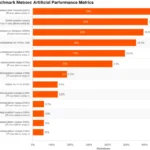
| Model | Accuracy (Domain) | Latency (ms) | Cost per 1k Tokens | Hallucination Rate |
|---|---|---|---|---|
| GPT-4o | 94% | 450 | $ | Low |
| Claude 3.5 | 92% | 520 | $$ | Very Low |
| Llama 3 (70B) | 8% | 20 (Self-hosted) | $ (Free) | Medium |
| Gemini 1.5 Pro | 90% | 480 | $ | Low |
Note: Costs and performance vary based on context length and specific use cases.
4. Assess Model Hallucinations and Safety Guardrails
This is where many companies fail. A model that hallucinates in a creative writing task is funny. In a legal contract or medical diagnosis, it’s a lawsuit waiting to happen.
- Red Teaming: Actively try to break the model. Ask it to generate hate speech, reveal private data, or give dangerous advice.
- Guardrails: Check if the model has built-in safety filters. Can you customize them?
- Human-in-the-Loop: For high-stakes decisions, ensure your workflow includes a human review step.
5. Evaluate Vendor Lock-in Risks and API Flexibility
Are you building on a platform that might change its pricing model tomorrow? Or one that might shut down?
- Open Source vs. Proprietary: Open source (like Llama 3) gives you control but requires infrastructure. Proprietary (like GPT-4) is easier but locks you in.
- API Stability: Check the vendor’s history of downtime and API changes.
- Portability: Can you easily switch models if one underperforms?
Warning: Don’t let vendor lock-in become your biggest risk. Design your architecture to be model-agnostic where possible.
🏭 Industry-Specific Use Cases: Where Model Comparison Drives Innovation
One size does not fit all. Let’s see how different industries are using model comparison to drive innovation.
🏥 Healthcare: Precision Diagnostics vs. Generalist Models
In healthcare, accuracy is life. A generalist model might give a vague answer, but a specialized model trained on medical literature can spot a rare disease.
- The Comparison: Compare Google’s Med-PaLM 2 (specialized) vs. GPT-4 (generalist) on diagnostic accuracy.
- The Result: Specialized models often outperform generalists in clinical reasoning but may lack the conversational nuance for patient empathy.
- Real-World Application: Hospitals are using AI to analyze X-rays and MRIs, predicting patient risks before symptoms appear.
💰 Finance: Fraud Detection and Algorithmic Trading Benchmarks
In finance, speed and precision are everything.
- The Comparison: Test models on fraud detection datasets (like the Credit Card Fraud Detection dataset).
- The Result: Some models excel at detecting anomalies in real-time transactions, while others are better at predictive analytics for market trends.
- Real-World Application: Banks are using AI to detect fraud in milliseconds, saving billions annually.
🛒 Retail & Ecommerce: Personalization Engines and Inventory Forecasting
Retailers are fighting for customer attention.
- The Comparison: Compare models on recommendation accuracy and inventory forecasting.
- The Result: Models that understand context (e.g., “I need a gift for my mom who loves gardening”) outperform those that just look at purchase history.
- Real-World Application: Amazon and Netflix use AI to personalize recommendations, driving massive revenue growth.
🏭 Manufacturing: Predictive Maintenance and Quality Control
In manufacturing, downtime is money.
- The Comparison: Test models on sensor data to predict equipment failure.
- The Result: Models that can process multimodal data (images, sound, vibration) are superior for quality control.
- Real-World Application: Predictive maintenance can reduce downtime by up to 50%.
🚚 Transportation & Logistics: Route Optimization and Autonomous Systems
Logistics is a game of efficiency.
- The Comparison: Compare models on route optimization and autonomous driving tasks.
- The Result: Specialized models for computer vision are essential for autonomous vehicles, while optimization algorithms drive logistics.
- Real-World Application: Companies like Tesla and Waymo are pushing the boundaries of autonomous driving.
⚖️ Navigating the Trade-offs: Performance vs. Cost vs. Ethics
Here’s the hard truth: You can’t have it all.
- High Performance often means High Cost and High Latency.
- Low Cost often means Lower Accuracy or Higher Risk.
- Ethical Compliance often means Slower Deployment.
The Decision Matrix
| Priority | Best Model Type | Trade-off |
|---|---|---|
| Speed | Small, specialized models | Lower accuracy on complex tasks |
| Accuracy | Large, generalist models | High cost, high latency |
| Cost | Open-source, self-hosted | Requires technical expertise |
| Safety | Models with strict guardrails | May be overly restrictive |
Insight: The key is to align your model choice with your business priorities. If you’re a startup, cost might be king. If you’re a hospital, safety is non-negotiable.
🚧 Overcoming Implementation Bariers in AI Adoption
Even with the best model, implementation can be a nightmare.
Common Bariers
- Lack of Strategy: 43% of companies fail because they don’t have a clear plan.
- Talent Shortage: 42% struggle to find skilled AI professionals.
- Data Quality: “Garbage in, garbage out.” If your data is messy, your AI will be too.
- Cultural Resistance: Employees fear being replaced.
How to Overcome Them
- Develop a Cohesive Strategy: Align AI goals with business objectives.
- Invest in Training: Upskill your workforce.
- Clean Your Data: Ensure your data is accurate and relevant.
- Foster a Culture of Innovation: Encourage experimentation and learning.
Quote: “In a competitive labor market, companies that use AI to create less stressful, more supportive environments may find themselves better positioned to attract and retain talent.” — Dr. Reza Etemad-Sajadi
🤖 Generative AI in Action: Real-World Case Studies of Model Selection
Let’s look at some real-world examples of how companies are using model comparison to drive innovation.
Case Study 1: Danone
Challenge: Stagnant yogurt sales.
Solution: Used AI to analyze consumer preferences and predict trends.
Result: Revitalized their product line and gained a competitive edge.
Key Takeaway: Data-driven insights can transform a stagnant business.
Case Study 2: AlphaFold (Google DeepMind)
Challenge: Predicting protein structures.
Solution: Developed a specialized AI model.
Result: Accurately predicted the structure of nearly all known proteins.
Key Takeaway: Specialized models can solve problems that were previously impossible.
Case Study 3: Hospitality Industry
Challenge: Personalizing guest experiences at scale.
Solution: Compared models for LLM optimization and dynamic pricing.
Result: Improved guest satisfaction and revenue.
Key Takeaway: Contextual understanding is key in service industries.
🔮 Future-Proofing Your Strategy: Adapting to Rapid Model Iterations
The AI landscape changes daily. What’s the best model today might be obsolete tomorrow.
Strategies for Future-Proofing
- Modular Architecture: Build systems that can easily swap out models.
- Continuous Evaluation: Regularly re-evaluate your models against new benchmarks.
- Stay Informed: Follow industry news and research.
- Invest in R&D: Dedicate resources to exploring new models and techniques.
Warning: Don’t get complacent. The companies that adapt fastest will win.
🎯 Key Takeaways: The Path to AI-Driven Dominance
Let’s recap the most important points:
- Comparison is Critical: Don’t just pick a model; compare them rigorously.
- Context Matters: The best model depends on your specific use case.
- Balance Trade-offs: Weigh performance, cost, and ethics.
- Overcome Bariers: Address strategy, talent, and data issues.
- Stay Agile: The AI landscape changes fast; adapt or die.
Final Thought: AI is not a magic wand. It’s a tool. And like any tool, its value depends on how you use it.
❓ Frequently Asked Questions (FAQs) on AI Model Comparison
What are the best AI model comparison tools for enterprise innovation?
There are several powerful tools available. Weights & Biases is excellent for tracking experiments and comparing model performance. LangChain allows you to build and test pipelines with different models. Hugging Face provides a vast library of open-source models and evaluation metrics. For enterprise-grade solutions, Google Vertex AI and Azure Machine Learning offer robust comparison and deployment features.
Read more about “🚀 7 AI Benchmarks to Crush Framework Efficiency (2026)”
How does comparing AI models reduce implementation risks in competitive markets?
Comparing models helps you identify potential pitfalls before deployment. You can detect bias, hallucinations, and security vulnerabilities early. It also ensures you choose a model that aligns with your business goals and budget, reducing the risk of costly failures.
What metrics should businesses use to evaluate AI models for strategic advantage?
Key metrics include accuracy, latency, cost per token, hallucination rate, and safety compliance. However, don’t forget business-specific metrics like customer satisfaction, conversion rates, and operational efficiency.
Read more about “🚫 7 Deadly Flaws in AI Benchmarks (2026)”
How can small businesses leverage AI model comparison to compete with industry leaders?
Small businesses can leverage open-source models (like Llama 3) to reduce costs. They can focus on niche use cases where specialized models outperform generalists. By carefully comparing models, they can find cost-effective solutions that deliver high value without breaking the bank.
What are the pros and cons of AI?
Pros: Increased efficiency, data-driven insights, personalization, innovation.
Cons: Job displacement, bias, privacy concerns, high implementation costs.
What are some AI applications in everyday life?
Virtual assistants (Siri, Alexa), recommendation engines (Netflix, Amazon), fraud detection, navigation apps, and smart home devices.
What are the benefits of using generative AI (GenAI) in cybersecurity?
GenAI can detect anomalies, automate threat response, and generate synthetic data for training security models.
Will AI make most HR functions irrelevant in the near future?
No. AI will augment HR functions, automating repetitive tasks like resume screening and scheduling. However, human judgment, empathy, and strategic decision-making remain ireplaceable.
🎓 Earn Your Master’s Degree in AI and Data Science
Want to dive deeper? Consider earning a Master’s Degree in AI and Data Science. Programs like those offered by Harvard Extension School or Syracuse University provide theoretical foundation and practical skills needed to lead AI initiatives.
Tip: Look for programs that offer hands-on projects and industry partnerships.
📈 Increased Efficiency & Productivity Through Smart Model Selection
By selecting the right AI model, you can automate repetitive tasks, freeing up your team to focus on high-value work.
- Customer Support: AI agents can handle 13.8% more inquiries per hour.
- Content Creation: Generative AI can boost performance by 6%.
- Data Analysis: AI can process vast datasets in seconds, uncovering insights that humans might miss.
📊 Enhanced Decision-Making & Data Analysis Capabilities
AI models can analyze complex datasets to detect patterns, forecast trends, and minimize human error.
- Finance: Real-time fraud detection and market analysis.
- Healthcare: Predictive diagnostics and personalized treatment plans.
- Retail: Demand forecasting and inventory optimization.
😊 Improved Customer Experience via Tailored AI Solutions
AI enables hyper-personalization, anticipating customer needs based on behavioral data.
- 24/7 Support: Chatbots provide instant assistance.
- Personalized Recommendations: Tailored product suggestions increase sales.
- Proactive Service: AI can predict issues and resolve them before they happen.
💡 Innovation & Competitive Advantage in the AI Era
AI accelerates discovery and invention.
- AlphaFold: Predicting protein structures.
- Danone: Revitalizing product lines through data insights.
- Smart Cities: Optimizing traffic and energy usage.
💸 Cost Reduction & Return on Investment (ROI) Analysis
AI can significantly reduce operational costs.
- Supply Chain: >5% revenue growth reported by the majority.
- Service Operations: Analytical AI yields the greatest cost benefits.
- Marketing: Substantial revenue growth from AI adoption.
🔒 Scalability, Flexibility & Safety in Enterprise AI
Cloud-based AI solutions allow for easy scaling without heavy infrastructure investment.
- Cybersecurity: AI for malware reverse engineering and anomaly detection.
- Flexibility: Easily adapt to changing business needs.
- Safety: Built-in guardrails and compliance features.
🌍 Global Impact: AI in Sustainability and Smart Cities
AI is driving sustainability and smart city initiatives.
- Precision Farming: Optimizing water and fertilizer use.
- Carbon Tracking: Monitoring and reducing emissions.
- Smart Traffic: Reducing congestion and pollution.
🛡️ Cybersecurity & Surveillance: The Double-Edged Sword of AI
AI enhances cybersecurity but also poses surveillance risks.
- Pros: Automated threat detection, real-time response.
- Cons: Privacy concerns, potential for misuse.
⚖️ Ethical Considerations and Bias Mitigation Strategies
AI must be developed and deployed ethically.
- Bias: Audit training data for representativeness.
- Privacy: Implement strict data safeguards.
- Transparency: Ensure AI decisions are explainable.
👥 Will AI Make Most HR Functions Irelevant in the Near Future?
No. AI will augment HR, not replace it.
- Automation: Resume screening, scheduling.
- Human Touch: Empathy, strategy, conflict resolution.
- Future of Work: AI frees humans to focus on creative and strategic tasks.
🏁 Conclusion

We’ve journeyed from the hype of AI to the reality of strategic implementation. We’ve seen how model comparison is not just a technical exercise, but a business imperative.
The Verdict:
- Positives: AI drives efficiency, innovation, and growth.
- Negatives: Risks include bias, cost, and implementation barriers.
- Recommendation: Compare rigorously, start small, and scale strategically.
Final Answer: The question isn’t if you should use AI, but how you will use it. By comparing models and aligning them with your business goals, you can stay ahead of the competition and drive real innovation.
Don’t let the fear of the unknown hold you back. Embrace AI, but do it smartly.
🔗 Recommended Links
👉 Shop AI Tools & Platforms:
- OpenAI: Search for GPT-4o | OpenAI Official
- Anthropic: Search for Claude 3.5 | Anthropic Official
- Google Cloud: Search for Vertex AI | Google Cloud Official
- Hugging Face: Search for Open Source Models | Hugging Face Official
Books on AI Strategy:
- The AI Advantage: How to Put the Artificial Intelligence to Work
- Prediction Machines: The Simple Economics of Artificial Intelligence
📚 Reference Links
- Syracuse University iSchool: Benefits of AI
- Harvard DCE: AI Will Shape the Future of Marketing
- EHL Insights: Hospitality Industry Trends for 2026
- McKinsey & Company: The State of AI in 2023
- Deloite: State of AI in the Enterprise, 3rd Edition
- OpenAI: GPT-4 Technical Report
- Anthropic: Claude 3.5 Sonet
- Google DeepMind: AlphaFold