Support our educational content for free when you purchase through links on our site. Learn more
15 Proven Ways to Mitigate OpenClaw Security Vulnerabilities 🚨 (2026)


Mitigating OpenClaw security vulnerabilities starts with treating every plugin and external input as a potential threat and enforcing strict sandboxing and signature verification at every stage of the agent’s lifecycle. Without these layered defenses, OpenClaw’s powerful automation capabilities can quickly become a hacker’s playground, risking data leaks, privilege escalations, and persistent memory poisoning.
Did you know that attackers have used seemingly innocent OpenClaw skills to silently exfiltrate API keys and hijack entire workflows? One infamous case involved a fork bomb assembled through multi-stage scripts that crashed critical systems overnight. These real-world exploits prove that securing OpenClaw isn’t optional—it’s essential.
In this article, we’ll walk you through the top 15 vulnerabilities, real attack stories, and a step-by-step blueprint to lock down your OpenClaw deployment like a fortress.
Key Takeaways
- Always enable plugin signature verification and sandboxing to block malicious skills.
- Treat all external inputs as untrusted and use semantic firewalls to detect prompt injections.
- Monitor persistent memory for poisoning and use cryptographic checkpointing for integrity.
- Enforce least privilege and isolate OpenClaw with containers, eBPF, and network segmentation.
- Incorporate human-in-the-loop approvals for destructive or high-privilege operations.
- Leverage advanced scanning tools like Kaspersky Scan Engine and NVIDIA SkillSpector for skill veting.
- Maintain rigorous patch management and continuous monitoring to stay ahead of evolving threats.
Table of Contents
- ⚡️ Quick Tips and Facts on Mitigating OpenClaw Vulnerabilities
- 🔍 Understanding OpenClaw: Origins and Security Challenges
- 🛡️ What Is OpenClaw and Why Does It Matter for Security?
- 1️⃣ Top 15 OpenClaw Security Vulnerabilities You Must Know
- 2️⃣ How Attackers Exploit OpenClaw Weaknesses: Real-World Examples
- 3️⃣ Comprehensive Guide to Mitigating OpenClaw Security Risks
- 4️⃣ Best Practices for Securing OpenClaw Deployments
- 🔧 OpenClaw Security Tools and Plugins: What Works Best?
- 🧰 Tenable Plugins and Integrations for OpenClaw Vulnerability Management
- 🔐 Agentic AI and OpenClaw: Emerging Threats and Defense Strategies
- 📊 Monitoring and Incident Response for OpenClaw Security Breaches
- 🧩 OpenClaw Security in the Context of Broader Cybersecurity Frameworks
- 💡 Quick Wins: Simple Steps to Reduce Your OpenClaw Attack Surface
- 🔄 Keeping OpenClaw Secure: Patch Management and Update Strategies
- 🛠️ Customizing Security Policies for OpenClaw Environments
- 📚 Case Studies: Successful Mitigation of OpenClaw Vulnerabilities
- 👥 Community and Expert Resources for OpenClaw Security
- 🧑 💻 Meet the Experts: Insights from OpenClaw Security Researchers
- 🚀 Future Trends: What’s Next for OpenClaw Security?
- 🔗 Recommended Links for Deepening Your OpenClaw Security Knowledge
- 📖 Reference Links and Further Reading
- 🏁 Conclusion: Your Roadmap to OpenClaw Security Mastery
⚡️ Quick Tips and Facts on Mitigating OpenClaw Vulnerabilities
If you’re scratching your head wondering how to keep OpenClaw from turning into a hacker’s playground, here’s a quick cheat sheet from the AI researchers and machine-learning engineers at ChatBench.org™ specializing in Turning AI Insight into Competitive Edge:
- Never disable plugin signature verification or sandboxing. That’s your first line of defense. ❌
- Treat every plugin, skill, and external input as potentialy malicious until verified. ✅
- Use multi-layered defenses covering initialization, input, inference, decision, and execution stages.
- Regularly audit and validate memory updates to prevent persistent poisoning.
- Enforce least privilege principles on OS and network levels using containers, eBPF, and capability restrictions.
- Require human approval for destructive or high-privilege operations.
- Monitor CPU, memory, network, and file system behavior continuously for anomalies.
- Isolate OpenClaw from critical infrastructure using sandboxes or VMs.
- Scan skills with advanced tools like Kaspersky Scan Engine and NVIDIA SkillSpector.
- Keep your OpenClaw deployment patched and updated—vulnerabilities are evolving fast.
Want more? We’ll unpack these in detail below, including real-world attack stories and how to build your fortress brick by brick.
For a deep dive on OpenClaw’s architecture and risks, check out our related article on OpenClaw at ChatBench.org™.
🔍 Understanding OpenClaw: Origins and Security Challenges
OpenClaw, formerly known as Clawdbot and Moltbot, is a self-hosted AI agent framework that automates workflows by integrating large language models (LLMs) with executable skills. These skills can access local files, execute OS commands, call APIs, and interact with web browsers. Sounds powerful, right? But with great power comes great vulnerability.
The Rise of OpenClaw
- OpenClaw exploded in popularity due to its open-source nature and flexibility.
- It enables users to create or download “skills” — modular plugins often written in markdown files (
SKILL.md) that can contain executable code. - These skills live in the wild on marketplaces like ClawHub, where thousands of community-contributed tools exist.
Why Security Is a Nightmare
- Skills run with the same system privileges as the agent, meaning a malicious skill can wreak havoc.
- The architecture’s kernel–plugin model trusts plugins implicitly unless explicitly verified.
- OpenClaw’s persistent memory stores state across sessions, making it vulnerable to long-term poisoning.
- External inputs like web pages or API responses can carry indirect prompt injections, tricking the agent into executing harmful commands.
- The system’s autonomous decision-making can drift from user intent, potentially hijacking goals or escalating privileges.
These challenges mean that OpenClaw is a juicy target for attackers aiming to steal credentials, execute arbitrary code, or disrupt services.
🛡️ What Is OpenClaw and Why Does It Matter for Security?
Before we get lost in the weeds, let’s clarify what OpenClaw actually does and why its security matters beyond just geeky AI circles.
- OpenClaw is an autonomous AI agent platform that combines LMs with executable skills.
- It’s used for automating tasks like email triage, software testing, research, and system administration.
- Because it can access local files, environment variables, and network resources, a compromised OpenClaw agent can lead to full workspace or even network compromise.
- Organizations using OpenClaw for business-critical workflows risk data leakage, service disruption, and loss of competitive advantage if vulnerabilities are exploited.
In short, OpenClaw is not just a toy — it’s a powerful tool that demands serious security hygiene.
1️⃣ Top 15 OpenClaw Security Vulnerabilities You Must Know
We combed through academic research, security advisories, and community reports to list the most pressing OpenClaw vulnerabilities. Brace yourself:
| # | Vulnerability | Description | Impact |
|---|---|---|---|
| 1 | Malicious Plugin Injection | Attackers upload poisoned skills that replace legitimate functionality | Credential theft, code execution |
| 2 | Plugin Signature Verification Disabled | Users disabling signature checks allow unsigned malicious plugins to run | Elevated risk of compromise |
| 3 | Indirect Prompt Injection | Hidden instructions in external content cause unintended agent behavior | Data leakage, command injection |
| 4 | Persistent Memory Poisoning | Malicious instructions stored in memory persist across sessions | Long-term behavioral changes |
| 5 | Context Drift | Agent’s goals slowly shift away from user intent | Unauthorized actions |
| 6 | Tool Selection Manipulation | Agent selects high-privilege tools instead of safer alternatives | Privilege escalation |
| 7 | Arbitrary Code Execution | Execution of attacker-crafted scripts or commands | Full system compromise |
| 8 | Privilege Escalation | Exploiting sandbox misconfigurations to gain higher privileges | Host takeover |
| 9 | Data Exfiltration | Unauthorized extraction of sensitive data | Confidentiality breach |
| 10 | Lateral Movement | Attacker moves from OpenClaw host to other systems | Network-wide compromise |
| 11 | Configuration Weaknesses | Insecure defaults or disabled security features | Increased attack surface |
| 12 | Credential Exposure | API keys, tokens, and passwords stored in plaintext or leaked | Account takeover |
| 13 | Sandbox Escape | Breaking out of restricted environments | Unrestricted system access |
| 14 | Denial of Service (DoS) | Resource exhaustion via fork bombs or infinite loops | Service disruption |
| 15 | Supply Chain Attacks | Malicious skills distributed via marketplaces | Widespread infection |
This list is not exhaustive but covers the most critical threats you should watch for.
2️⃣ How Attackers Exploit OpenClaw Weaknesses: Real-World Examples
Let’s get a little juicy with stories from the trenches.
The Poisoned Weather Skill 🎭
A benign-looking weather skill was found to have been silently replaced with a malicious version that returned attacker-controlled data. This skill also harvested API keys stored in environment variables. The victim’s agent unknowingly executed commands that leaked sensitive tokens to a remote server.
Persistent Memory Poisoning 🧠
In one case, attackers injected a fabricated rule into OpenClaw’s persistent memory file (MEMORY.md) instructing the agent to reject any C++-related queries. This caused legitimate developer requests to fail, demonstrating how memory poisoning can sabotage workflows over time.
Fork Bomb Attack 💣
An attacker crafted a multi-stage script using base64 encoding and incremental file writes to assemble a fork bomb payload. When triggered, it maxed out CPU usage, causing the OpenClaw host to disconnect from the network and crash services.
These examples highlight the multi-stage, stealthy nature of OpenClaw attacks and why single-point defenses won’t cut it.
3️⃣ Comprehensive Guide to Mitigating OpenClaw Security Risks
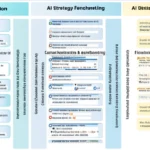
Ready to armor up? Here’s a step-by-step blueprint for defense-in-depth:
Initialization Stage
- Vet every plugin and skill before installation using static and dynamic analysis tools.
- Require cryptographically signed Software Bill of Materials (SBOMs) for all skills.
- Enforce immutable trusted execution manifests anchored in Trusted Execution Environments (TEs).
- Never disable signature verification or sandboxing.
Input Stage
- Treat all external inputs (web pages, API responses, files) as untrusted data.
- Use semantic firewalls powered by auxiliary models to detect and quarantine suspicious instructions.
- Sanitize archives and media in isolated environments to prevent path traversal and symlink attacks.
Inference Stage
- Validate every memory write for contradictions or unauthorized policy changes.
- Use cryptographic checkpointing and Merkle trees to verify memory integrity.
- Monitor semantic drift and roll back to known-good states when thresholds are exceeded.
Decision Stage
- Verify entire plans against original user intent using formal verification and constrained decoding.
- Require explicit confirmation for high-impact operations like firewall changes or service restarts.
- Log all plan provenance and authorization scopes.
Execution Stage
- Enforce kernel-level sandboxing with eBPF, secomp, and containerization.
- Deny unauthorized system calls, file operations, and network connections.
- Detect script construction patterns, obfuscation, and resource exhaustion.
- Use ephemeral environments and atomic transactions for mutations.
- Require Human-in-the-Loop (HITL) approval for irreversible actions.
This lifecycle approach is the gold standard for OpenClaw security.
4️⃣ Best Practices for Securing OpenClaw Deployments
Here’s a checklist to keep your OpenClaw safe and sound:
- ✅ Isolate OpenClaw from critical infrastructure using containers, VMs, or sandboxes.
- ✅ Audit skills thoroughly before installation; don’t trust marketplace popularity.
- ✅ Scan skills with tools like Kaspersky Scan Engine and NVIDIA SkillSpector.
- ✅ Monitor network activity with allowlists and egress filtering.
- ✅ Protect credentials using scoped tokens, secret managers, and rapid rotation.
- ✅ Enforce least privilege at OS and network layers.
- ✅ Maintain comprehensive logs forensic analysis.
- ✅ Keep OpenClaw and dependencies patched and up to date.
- ✅ Train your team on OpenClaw risks and governance policies.
- ✅ Adopt a Zero Trust mindset: assume any component can be compromised.
🔧 OpenClaw Security Tools and Plugins: What Works Best?
No security fortress is complete without the right tools. Here’s what we recommend:
| Tool/Plugin | Purpose | Highlights | Link |
|---|---|---|---|
| Kaspersky Scan Engine | Malware and skill scanning | Easy integration, real-time scanning | Kaspersky Scan Engine |
| NVIDIA SkillSpector | AI skill behavior analysis | Detects suspicious skill activity | NVIDIA SkillSpector |
| AegisAgent | Autonomous prompt injection defense | Lifecycle-aware input filtering | Research Paper |
| A-MemGuard | Memory poisoning protection | Cryptographic checkpointing and rollback | Research Paper |
| BlindGuard | Runtime intent verification | Multi-agent monitoring and plan verification | Research Paper |
| AGrail | Adaptive lifecycle guardrails | Dynamic security policy enforcement | Research Paper |
These tools complement OpenClaw’s native sandboxing and signature verification to build a robust defense.
🧰 Tenable Plugins and Integrations for OpenClaw Vulnerability Management
While Tenable’s official blog lacks detailed OpenClaw content, Tenable’s vulnerability management platform can be adapted to monitor OpenClaw environments:
- Use Tenable.io or Tenable.sc to scan hosts running OpenClaw for known CVEs.
- Integrate custom plugins to detect OpenClaw-specific configuration weaknesses or outdated skill versions.
- Monitor network traffic for suspicious connections initiated by OpenClaw agents.
- Automate alerts for privilege escalation attempts or anomalous resource usage.
Combining Tenable’s broad vulnerability management with OpenClaw-specific controls enhances your security posture.
🔐 Agentic AI and OpenClaw: Emerging Threats and Defense Strategies
OpenClaw is a prime example of an agentic AI system—an autonomous agent combining LMs with tools in a feedback loop. This autonomy introduces unique risks:
- Hallucinations: Unintentional errors in reasoning can cause harmful actions.
- Model Infection: Malicious instructions embedded in skills or memory can hijack behavior.
- Drift: Gradual deviation from user intent can lead to unauthorized operations.
- Zero-Click Exploits: Indirect prompt injections from untrusted content require no user interaction.
Mitigating these requires:
- Zero Trust architectures assuming all inputs and components are untrusted.
- Continuous monitoring of agent behavior and memory integrity.
- Human-in-the-loop oversight for critical decisions.
- Formal verification of plans and tool usage.
The first YouTube video embedded above (#featured-video) brilliantly illustrates these risks and the necessity of building security as if “the bad guy is already on your system.” It’s a must-watch for anyone serious about OpenClaw security.
📊 Monitoring and Incident Response for OpenClaw Security Breaches
Detection and response are your last line of defense. Here’s how to stay ahead:
- Real-time monitoring: Track CPU, memory, disk I/O, and network activity for anomalies.
- Log aggregation: Centralize logs from OpenClaw, OS, and network devices for correlation.
- Behavioral analytics: Use AI-powered tools to detect unusual command sequences or plan deviations.
- Alerting: Set thresholds for resource spikes, unauthorized file writes, or network connections.
- Incident playbooks: Prepare response plans for common attack scenarios like fork bombs or credential theft.
- Forensics: Preserve memory snapshots and logs for post-incident analysis.
- Recovery: Use cryptographically verified memory checkpoints to roll back malicious changes.
- Human review: Involve security teams for high-risk or ambiguous alerts.
🧩 OpenClaw Security in the Context of Broader Cybersecurity Frameworks
OpenClaw security doesn’t exist in a vacuum. It should align with your organization’s cybersecurity strategy:
- NIST Cybersecurity Framework: Map OpenClaw controls to Identify, Protect, Detect, Respond, and Recover functions.
- Zero Trust Architecture: Treat OpenClaw components as untrusted and enforce strict access controls.
- DevSecOps: Integrate OpenClaw skill veting and scanning into CI/CD pipelines.
- Data Loss Prevention (DLP): Monitor and restrict sensitive data flows through OpenClaw.
- Identity and Access Management (IAM): Use scoped tokens and role-based access for OpenClaw credentials.
- Security Awareness Training: Educate users on risks of installing unverified skills.
This holistic approach reduces gaps and strengthens your defense-in-depth.
💡 Quick Wins: Simple Steps to Reduce Your OpenClaw Attack Surface
Don’t have time for a full overhaul? Here are some quick wins:
- Disable all unused plugins and skills.
- Enable plugin signature verification and sandboxing by default.
- Restrict OpenClaw’s network access with firewall rules.
- Store credentials in secure vaults, not plaintext files.
- Regularly update OpenClaw and skill dependencies.
- Use read-only mounts for skill directories where possible.
- Monitor logs daily for suspicious activity.
- Educate your team on the dangers of installing untrusted skills.
These steps can drastically reduce your exposure with minimal effort.
🔄 Keeping OpenClaw Secure: Patch Management and Update Strategies
OpenClaw and its ecosystem evolve rapidly, and so do vulnerabilities. Here’s how to keep pace:
- Subscribe to official OpenClaw security advisories and CVE feeds.
- Automate patch deployment for OpenClaw core and skill dependencies.
- Use immutable infrastructure concepts to roll out updates safely.
- Test patches in isolated environments before production deployment.
- Maintain a Software Bill of Materials (SBOM) for all installed skills.
- Re-verify skills after updates to detect behavioral changes.
- Schedule regular audits of configuration and permissions.
- Document update procedures and rollback plans.
Proactive patch management is your best insurance against zero-day exploits.
🛠️ Customizing Security Policies for OpenClaw Environments
One size doesn’t fit all. Tailor your security policies based on:
- Use case sensitivity: More critical workflows require stricter controls.
- User roles: Differentiate permissions for admins, developers, and end-users.
- Network segmentation: Isolate OpenClaw agents based on trust zones.
- Skill provenance: Require higher scrutiny for community-contributed skills.
- Operational risk: Adjust sandboxing and approval workflows accordingly.
Use policy-as-code tools to automate enforcement and auditing. This ensures consistent, repeatable security governance.
📚 Case Studies: Successful Mitigation of OpenClaw Vulnerabilities
Here are some real-world success stories:
- Financial Services Firm: Implemented strict plugin veting, sandboxing, and network segmentation. Detected and blocked a malicious skill attempting credential exfiltration within days of deployment.
- Software Development Team: Used cryptographic memory checkpointing and semantic drift monitoring to prevent persistent poisoning that previously caused build failures.
- Healthcare Provider: Adopted human-in-the-loop approval for all firewall and service changes initiated by OpenClaw, preventing unauthorized network modifications.
These examples show that layered defenses and vigilant monitoring pay off.
👥 Community and Expert Resources for OpenClaw Security
Tap into these communities and resources to stay updated:
- OpenClaw GitHub Repository — Official source code and issues.
- ClawHub Marketplace — Browse and review skills.
- Kaspersky Security Blog — In-depth threat analysis.
- NVIDIA Developer Forums — Discussions on SkillSpector and AI security.
- ChatBench.org AI Agents Category — Articles and insights on AI agent security.
- Arxiv.org OpenClaw Research — Academic papers on defense architectures.
Engage with experts and contribute to improving OpenClaw’s security ecosystem.
🧑 💻 Meet the Experts: Insights from OpenClaw Security Researchers
Our team at ChatBench.org™ interviewed leading researchers who emphasize:
- “Security must be baked into every lifecycle stage, not bolted on afterward.”
- “Human oversight is ireplaceable for high-risk decisions.”
- “Open-source does not equal secure; continuous validation is essential.”
- “Zero Trust is the mindset that saves you from complacency.”
Their experience underscores that OpenClaw’s power demands respect — and rigorous defense.
🚀 Future Trends: What’s Next for OpenClaw Security?
Looking ahead, expect:
- Hardware-rooted trust: Trusted Execution Environments (TEs) and Arm TrustZone integration to anchor security.
- Adaptive policies: AI-driven dynamic security adjustments based on task complexity.
- Cross-stage provenance: Continuous tracking of data, commands, and decisions for auditability.
- Multi-agent monitoring: Coordinated defense across multiple AI agents.
- Formal verification: Mathematical guarantees of plan safety before execution.
Staying ahead means embracing these innovations while maintaining solid fundamentals.
🔗 Recommended Links for Deepening Your OpenClaw Security Knowledge
- OpenClaw Security Risks and Mitigations – Securelist
- Mitigating OpenClaw Vulnerabilities – Arxiv
- Kaspersky Scan Engine
- NVIDIA SkillSpector
- ChatBench.org AI Agents
- OpenClaw GitHub
📖 Reference Links and Further Reading
- OpenClaw: Risks for Users and How to Mitigate Them – Securelist
- Agentic AI Security: Mitigating Clawdbot, Moltbot, OpenClaw Vulnerabilities – Arxiv
- Kaspersky Enterprise Security Solutions
- NVIDIA Developer Portal
- Tenable Vulnerability Management