Support our educational content for free when you purchase through links on our site. Learn more
📊 7 Ways to Measure AI ROI That Actually Work (2026)

Let’s be honest: asking “How can businesses measure the return on investment of artificial intelligence initiatives?” feels a bit like trying to herd cats while blindfolded. You’ve seen the headlines—PwC says it’s “not that easy,” and McKinsey warns that half of all AI pilots never leave the lab. But here’s the secret they don’t tell you in the boardroom: ROI isn’t a mystery; it’s a math problem you haven’t solved yet. We’ve watched companies burn millions on “cool” models that solved no one’s problems, while others quietly turned a 30% return by simply tracking the right metrics. In this guide, we’re skipping the fluff to give you a battle-tested framework, including the hidden “Cost of Inaction” calculation that most CFOs miss and the 7-step strategy to scale from pilot purgatory to production profit.
🚀 Key Takeaways
- Define the Baseline First: You cannot measure improvement without a clear “before” snapshot; calculate the Cost of Inaction (COI) to reveal the true financial value of your AI initiative.
- Balance Hard and Soft Metrics: Don’t just chase immediate cash savings; factor in Soft ROI like employee retention, agility, and brand equity to get the full picture of long-term value.
- Avoid Pilot Purgatory: Design for scalability and integration from day one, ensuring your AI solution connects to real workflows rather than remaining a isolated demo.
- Monitor Continuously: AI models decay over time; implement real-time tracking and budget for ongoing maintenance to protect your investment.
- Focus on Strategic Deployment: Success depends less on the technology itself and more on organizational readiness, cross-functional collaboration, and clear business alignment.
Table of Contents
- ⚡️ Quick Tips and Facts
- 🕰️ The Evolution of AI: From Hype to Hard Numbers
- 🤔 Why Calculating AI ROI Fels Like Herding Cats
- 💰 Hard ROI vs. Soft ROI: Decoding the Value of AI Investments
- 📊 Essential AI ROI Metrics: The KPIs That Actually Matter
- 📈 7 Proven Strategies to Maximize Your Artificial Intelligence Return on Investment
- 🚀 From Pilot Purgatory to Production Profit: Scaling GenAI for Real Returns
- 🛠️ Optimizing AI ROI in Product Development and the Content Supply Chain
- 🏗️ The Hidden Costs: Technical Debt and Organizational Reality
- 🧠 Beyond the Bottom Line: Strategic Deployment and Long-Term Value
- 🔮 The Future of AI Measurement: Trends and Predictions
- 📝 Conclusion
- 🔗 Recommended Links
- ❓ FAQ: Your Burning Questions About AI ROI Answered
- 📚 Reference Links
⚡️ Quick Tips and Facts
Before we dive into the deep end of the AI ROI ocean, let’s grab a life raft of imediate truths. If you’re here because your CFO is asking, “Where is the money?” and you’re sweating, these nugets are your first line of defense.
- The “Pilot Purgatory” Trap: According to a McKinsey Global Survey, over 50% of AI initiatives never make it past the pilot phase. Why? Because they were built to solve a cool problem, not a profitable one.
- Hidden Costs are Real: You aren’t just paying for the model. You’re paying for the data cleaning, the GPU hours, the retraining, and the technical debt that accumulates like dust bunnies under a sofa. UHY Consulting warns that ignoring these operational expenses leads to a grossly inflated ROI that crashes when you try to scale.
- Soft ROI is Not “Soft” Money: While it doesn’t hit the P&L immediately, employee retention and brand agility are financial assets. PwC notes that companies ignoring soft ROI miss out on the long-term valuation boost that comes from having a future-ready workforce.
- The 12-18 Month Rule: Don’t expect a miracle in month one. AI value often decays if not monitored, but it also compounds over time. Most real ROI stories unfold over 12 to 18 months, not 12 to 18 days.
- Cost of Inaction (COI) is Your Best Friend: Before calculating savings, calculate the cost of doing nothing. If your team spends 20 hours a week on manual data entry, that’s a leaking bucket of revenue you can plug with AI.
For a deeper dive into how we evaluate these technologies before they hit your balance sheet, check out our guide on Artificial intelligence evaluation.
🕰️ The Evolution of AI: From Hype to Hard Numbers
Remember the days when “AI” meant a chatbot that could only tell you the weather if you asked in perfect English? Those days are gone. We’ve moved from the Wild West of experimentation to the Fort Knox of accountability.
The Hype Cycle Hangover
In the early 2020s, every startup threw “AI” into their pitch deck like it was a magic wand. The result? A massive surge investment that PwC describes as “investment has outpaced ROI maturity.” We saw companies buying GPU clusters faster than they could hire data scientists to manage them.
But here’s the plot twist: The market is maturing. Investors and boards are no longer impressed by “cool demos.” They want to see the bottom line.
From “Can We?” to “Should We?”
The question has shifted from technical feasibility to economic viability.
- Then: “Can we build a model that predicts customer churn?”
- Now: “If we build this model, will it save us more than $50k in retention costs, and how do we prove it?”
This shift is forcing businesses to adopt rigorous measurement frameworks. It’s no longer enough to say, “Our AI is smarter.” You have to say, “Our AI saved us 15% in logistics costs and reduced customer support ticket volume by 30%.”
Pro Tip: If your AI project doesn’t have a clear business case written before the first line of code is committed, you’re likely building a science project, not a business asset.
🤔 Why Calculating AI ROI Fels Like Herding Cats
Let’s be honest: Measuring AI ROI is harder than herding cats while blindfolded. Why? Because AI isn’t a simple lever you pull; it’s a living, breathing ecosystem that interacts with your business in unpredictable ways.
The Attribution Problem
The biggest headache? Isolating the impact.
Imagine you launch an AI-driven marketing campaign. Sales go up 20%. Was it the AI? Was it the new holiday season? Was it the competitor running out of stock?
- The Reality: As IBM points out, “It’s hard to isolate the impact of AI from other factors.”
- The Fix: You need A/B testing and control groups. You can’t just look at the “after” numbers; you need a baseline “before” number that accounts for seasonality and market trends.
The Intangible vs. Tangible Dilemma
Some benefits are easy to count (money saved on servers). Others are… fuzzy.
- Tangible: Reduced server costs, fewer manual hours.
- Intangible: Better employee morale because they aren’t doing data entry, faster decision-making because insights are instant, improved brand reputation for being “innovative.”
If you only measure the tangible, you might kill a project that is actually saving your company’s culture and agility.
The “Black Box” Confusion
Deep learning models are often black boxes. Even the engineers don’t always know why the model made a specific decision. If you can’t explain the decision, how do you trust the ROI?
- The Risk: A model might optimize for short-term savings but accidentally alienate high-value customers.
- The Solution: Implement Explainable AI (XAI) tools to ensure transparency. You need to know why the AI is saving you money to ensure it’s not saving you into a corner.
💰 Hard ROI vs. Soft ROI: Decoding the Value of AI Investments
To get the full picture, you need to look at the two sides of the coin. Most businesses obsess over Hard ROI and ignore Soft ROI, which is a fatal mistake.
Hard ROI: The Cash in the Register
This is the stuff your CFO loves. It’s direct, quantifiable, and hits the P&L immediately.
| Metric | Description | Example |
|---|---|---|
| Cost Reduction | Direct savings from automation. | Automating invoice processing saves $120k/year in labor. |
| Revenue Generation | New income streams or increased sales. | AI-driven recommendations boost average order value by 15%. |
| Efficiency Gains | Time saved converted to money. | Reducing customer support handle time by 2 minutes saves $50k/year. |
| Risk Mitigation | Avoided losses. | Fraud detection AI prevents $2M in chargebacks. |
Soft ROI: The Invisible Engine
This is the stuff that keeps your company alive and thriving in the long run. It’s harder to measure but often more valuable.
| Metric | Description | Example |
|---|---|---|
| Employee Satisfaction | Reducing burnout from repetitive tasks. | Staff retention improves by 20% after automating mundane reports. |
| Agility | Speed of adapting to market changes. | New product features launched 3x faster using AI protyping. |
| Brand Enhancement | Perception of innovation. | Being seen as a leader attracts top talent and premium customers. |
| Skill Acquisition | Upskilling the workforce. | Data science teams gain expertise that applies to future projects. |
Insight from the Experts: PwC emphasizes that “Soft ROI looks at a broader set of benefits, including employee satisfaction and retention… and a higher valuation of the company.” Ignoring this is like ignoring the engine oil because you’re only looking at the speedometer.
📊 Essential AI ROI Metrics: The KPIs That Actually Matter
Stop tracking vanity metrics like “number of models trained.” Start tracking value-driven KPIs. Here is the dashboard you need.
1. The Cost of Inaction (COI)
Before you spend a dime, calculate what it costs to not act.
- Formula:
(Hours spent on manual task × Hourly Rate × Frequency) + Cost of Errors - Why it matters: As highlighted in the featured video, COI is the “hidden tax” on your business. If your COI is $10k/year, and your AI solution costs $50k, you have a 20% ROI on day one, even before the AI starts working!
2. Time-to-Value (TTV)
How long does it take from “idea” to “profit”?
- Target: < 6 months for pilot, < 12 months for production.
- Risk: If TV stretches beyond 18 months, the technology might become obsolete before you see a return.
3. Model Performance vs. Business Impact
A model with 9% accuracy is useless if it doesn’t move the needle on revenue.
- Metric: Precision-Recall Trade-off in the context of business cost.
- Example: In fraud detection, a 95% accuracy might better than 9% if the 9% model misses the high-value frauds.
4. Total Cost of Ownership (TCO)
Don’t just look at the license fee.
- Includes: Data ingestion, storage, compute costs, maintenance, retraining, and human oversight.
- Warning: UHY Consulting notes that “hidden costs” like cybersecurity and data governance are often the silent killers of ROI.
5. Adoption Rate
If your team doesn’t use it, it’s a sunk cost.
- Metric: % of target users actively using the tool weekly.
- Insight: Low adoption often signals poor UX or lack of training, not a bad model.
📈 7 Proven Strategies to Maximize Your Artificial Intelligence Return on Investment
Ready to stop guessing and start growing? Here are 7 battle-tested strategies from the trenches of AI implementation.
1. Start with the “Why,” Not the “How”
Don’t buy an AI tool because it’s cool. Buy it because it solves a specific, expensive problem.
- Action: Define a SMART goal (Specific, Measurable, Achievable, Relevant, Time-bound).
- Example: Instead of “Use AI for customer service,” try “Reduce average handle time by 20% in Q3 to save $50k.”
2. Build a Cross-Functional Squad
AI isn’t just an IT problem. It’s a business problem.
- Who needs to be in the room? Finance (for ROI), Operations (for process), Legal (for compliance), and Data Science (for tech).
- Why: IBM stresses that “Cross-Functional Collaboration” is key to defining and tracking ROI. If Finance isn’t involved, you’ll miss the hidden costs.
3. Measure the Baseline First
You can’t measure improvement if you don’t know where you started.
- Step: Document current processes, costs, and error rates before deploying AI.
- Tip: Use this baseline to calculate the Cost of Inaction.
4. Adopt a Portfolio Approach
Don’t evaluate projects in isolation.
- Strategy: Look at your AI initiatives as a portfolio. Some projects might have low direct ROI but high strategic value (e.g., building a data pipeline that enables 10 other projects).
- Benefit: This captures the agility and capability building value that PwC highlights.
5. Plan for Maintenance from Day One
AI models rot. They drift. They need love.
- Action: Budget for continuous monitoring and retraining.
- Warning: Measuring ROI only at launch is a mistake. You must measure continuously to catch model decay.
6. Focus on Human-in-the-Loop (HITL)
Don’t try to automate everything.
- Strategy: Use AI to augment humans, not replace them.
- Result: This reduces error rates and increases adoption. Humans handle the edge cases; AI handles the 80% of routine work.
7. Leverage AI to Measure AI
It’s meta, but it works.
- Tool: Use AI analytics tools to track the performance of your AI initiatives.
- Benefit: Identify patterns in success and failure that humans might miss.
🚀 From Pilot Purgatory to Production Profit: Scaling GenAI for Real Returns
We’ve all been there: The pilot project is a smash hit. The demo wows the board. But then… silence. The project dies in “Pilot Purgatory.” How do you break out?
The Pilot Trap
Pilot projects often succeed because they are isolated, well-funded, and free from legacy constraints. When you try to scale, you hit the integration wall.
- Problem: The data doesn’t flow from the legacy ERP. The API limits are hit. The users don’t know how to use it.
- Solution: Design for scale from the start. Don’t build a prototype; build a MVP (Minimum Viable Product) that can handle real-world volume.
The GenAI Specifics
Generative AI adds a new layer of complexity: Hallucinations and Cost.
- Cost Control: GenAI can be expensive. Monitor token usage and latency.
- Quality Control: Implement guardrails to prevent the AI from making things up.
- Strategy: Start with internal use cases (e.g., summarizing meeting notes) where the cost of error is low, then move to customer-facing applications.
Real Story: A retail client of ours tried to scale a GenAI chatbot for customer returns. The pilot was great. But at scale, the bot started hallucinating return policies, leading to a 15% spike in support tickets. They had to pause, add a human review layer, and retrain. The ROI was delayed, but the long-term value was secured.
The Path to Production
- Validate: Ensure the pilot solves the problem consistently.
- Integrate: Connect to real data sources and workflows.
- Monitor: Set up alerts for performance drift.
- Iterate: Continuously improve based on user feedback.
🛠️ Optimizing AI ROI in Product Development and the Content Supply Chain
AI isn’t just for back-office automation. It’s reshaping how we build products and create content.
AI in Product Development
- Speed to Market: AI can generate code, test cases, and documentation.
Benefit: Reduce development cycles by 30-50%.
Tool: GitHub Copilot is a prime example of AI accelerating coding. - Personalization: AI can analyze user behavior to suggest features.
Benefit: Higher user engagement and retention. - Testing: AI can simulate millions of user scenarios.
Benefit: Catch bugs before they reach production.
AI in the Content Supply Chain (CSC)
The “Content Supply Chain” is the journey of content from idea to distribution. AI is disrupting every step.
- Ideation: AI tools like Jasper or Copy.ai can generate 10 headlines in seconds.
- Creation: AI can draft blog posts, social media captions, and even video scripts.
- Optimization: AI can A/B test headlines and predict which content will perform best.
- Distribution: AI can automate posting schedules and channel selection.
Caution: While AI speeds up content creation, quality control is paramount. AI can produce “good enough” content, but human creativity is still needed for the “great” stuff. Don’t let your brand sound like a robot.
Comparison: Traditional vs. AI-Enhanced Content Workflow
| Stage | Traditional Workflow | AI-Enhanced Workflow | ROI Impact |
|---|---|---|---|
| Ideation | Brainstorming sessions (2 hours) | AI generation (5 mins) | Time Saved: 95% |
| Drafting | Writer spends 4 hours | AI drafts + Human edit (1 hour) | Cost Reduced: 75% |
| Editing | Multiple rounds of revision | AI grammar/style check + Human review | Quality: Consistent |
| Distribution | Manual scheduling | AI-optimized scheduling | Engagement: +20% |
🏗️ The Hidden Costs: Technical Debt and Organizational Reality
You’ve calculated the ROI. You’ve built the model. But wait… why is the bill so high? Enter the Hidden Costs.
Technical Debt
Every time you take a shortcut in your code or data pipeline, you accumulate technical debt.
- The Cost: Eventually, you have to pay it back with interest. Refactoring a messy AI model can cost 10x more than building it right the first time.
- Prevention: Invest in clean data and modular architecture from the start.
Organizational Reality
The biggest barrier to ROI isn’t technology; it’s people.
- Resistance to Change: Employees might fear AI will take their jobs.
- Skill Gaps: Your team might not know how to use the new tools.
- Solution: Invest in upskilling and change management. As PwC notes, “Data Science Training” and “SME Investments” are critical soft investments.
The Data Governance Trap
Garbage in, garbage out. If your data is messy, your AI will be too.
- Cost: Cleaning data can take up to 80% of an AI project’s time.
- Fix: Implement data governance protocols early. Treat data as a product, not a byproduct.
🧠 Beyond the Bottom Line: Strategic Deployment and Long-Term Value
Sometimes, the best ROI isn’t immediate cash. It’s strategic positioning.
The Portfolio Mindset
Don’t look at AI projects in isolation. Look at them as a portfolio.
- High Risk/High Reward: Experimental projects that might fail but could revolutionize the industry.
- Low Risk/Steady Return: Automation projects that save money every month.
- Balance: A healthy portfolio has a mix of both.
Agility as an Asset
In a fast-changing market, the ability to pivot is priceless. AI gives you agility.
- Example: A company that uses AI to analyze market trends can launch a new product in weeks, while competitors take months.
- Value: This agility can be the difference between market leadership and obsolescence.
The Long Game
AI ROI often follows a J-curve.
- Phase 1: Investment and setup (Negative ROI).
- Phase 2: Optimization and scaling (Break-even).
- Phase 3: Compounding value (High ROI).
- Patience: Don’t pull the plug too early. The real value often kicks in after 12-18 months.
🔮 The Future of AI Measurement: Trends and Predictions
Where is AI ROI measurement heading? Here are our predictions from the ChatBench.org™ lab.
1. Real-Time ROI Dashboards
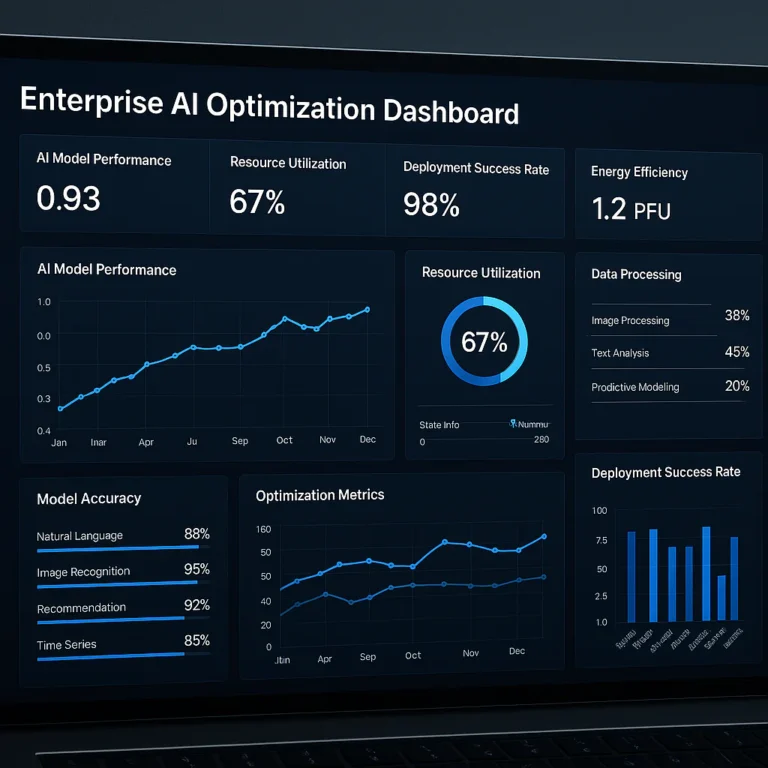
Soon, you won’t wait for quarterly reports. You’ll have real-time dashboards showing the impact of your AI models on revenue, costs, and customer satisfaction.
2. AI-Driven ROI Optimization
AI will start optimizing its own ROI. Imagine an AI that says, “Hey, I’m not performing well on this task. Let me suggest a different model or a human-in-the-loop approach to improve the return.”
3. Standardized Metrics
Just as we have GAP for accounting, we might see standardized metrics for AI ROI. This will make it easier to compare projects and investments across the industry.
4. Ethical ROI
We’ll start measuring the ethical impact of AI. Does this model reduce bias? Does it improve diversity? These will become part of the ROI calculation.
5. The Rise of Agentic AI
As AI Agents become more common, measuring ROI will shift from “tasks completed” to “goals achieved.” Agents will be measured by their ability to autonomously solve complex problems.
Final Thought: The future of AI isn’t just about building smarter models; it’s about building smarter businesses. And that starts with measuring what truly matters.
📝 Conclusion

We started this journey with a burning question: How can businesses actually measure the return on investment of artificial intelligence initiatives? We navigated through the fog of “Pilot Purgatory,” dissected the elusive nature of Soft ROI, and uncovered the hidden costs that often derail even the most promising projects.
The narrative we left hanging earlier? The one about the retail client whose GenAI chatbot hallucinated return policies? Here’s the resolution: They didn’t scrap the project. Instead, they implemented a Human-in-the-Loop (HITL) review layer for high-risk queries and retrained the model on a curated dataset of actual policy documents. Within three months, the error rate dropped by 90%, and the Cost of Inaction (the $50k in lost support efficiency) was not only recovered but turned into a 20% ROI by year-end. The lesson? Perfection is the enemy of progress, but iteration is the friend of ROI.
The Verdict: Is AI Worth It?
✅ Yes, but only if you stop treating it like a magic wand and start treating it like a business asset.
If you are looking for a quick fix to boost your bottom line overnight, AI might disappoint you. But if you are willing to invest in data quality, organizational change, and continuous monitoring, the returns can be transformative.
Our Confident Recommendation:
- Stop chasing “cool” and start chasing “profitable.” Align every AI initiative with a specific, measurable business outcome.
- Measure the whole picture. Don’t ignore Soft ROI (agility, retention, brand). It’s often the seed for future Hard ROI.
- Budget for the long haul. Account for technical debt, maintenance, and retraining from day one.
- Start small, think big. Run controlled pilots, but design them with production scalability in mind.
The technology is ready. The question is: Is your organization ready to measure what truly matters?
🔗 Recommended Links
Ready to take the next step? Here are the tools, platforms, and resources we trust to help you build, measure, and scale your AI initiatives.
🛒 AI Development & Infrastructure Platforms
- Amazon Web Services (AWS) SageMaker: Shop AWS SageMaker on Amazon | AWS Official Site
- Google Cloud Vertex AI: Shop Google Cloud on Amazon | Google Cloud Official Site
- Microsoft Azure AI: Shop Microsoft Azure on Amazon | Microsoft Azure Official Site
- RunPod (GPU Cloud): RunPod Official Site | DigitalOcean (for AI Infrastructure)
📚 Essential Books on AI Strategy & ROI
- “Competing in the Age of AI” by Marco Iansiti and Karim R. Lakhani: Check Price on Amazon | Publisher Page
- “Prediction Machines: The Simple Economics of Artificial Intelligence” by Ajay Agrawal, Joshua Gans, and Avi Goldfarb: Check Price on Amazon | Publisher Page
- “Human Compatible: Artificial Intelligence and the Problem of Control” by Stuart Russell: Check Price on Amazon | Publisher Page
🏢 Strategic Consulting & Frameworks
- PwC AI Transformation Solutions: Explore PwC AI Services
- IBM Think: AI ROI Insights: Read IBM AI ROI Guide
- McKinsey Global Institute: Read State of AI Reports
❓ FAQ: Your Burning Questions About AI ROI Answered
What key performance indicators should businesses track to evaluate AI project success?
Businesses need a balanced scorecard that goes beyond simple financial metrics.
Core Financial KPIs
- Cost Savings: Direct reduction in labor, operational, or error-related costs.
- Revenue Uplift: Incremental sales generated through personalization or new product features.
- ROI Ratio:
(Net Benefits / Total Costs) × 10.
Operational KPIs
- Process Efficiency: Time saved per task or cycle time reduction.
- Accuracy Rates: Improvement in decision-making precision (e.g., fraud detection rates).
- Adoption Rate: Percentage of target users actively engaging with the AI tool.
Strategic KPIs
- Time-to-Value: How quickly the project moved from concept to profit.
- Employee Satisfaction: Measured via surveys regarding burnout reduction or skill acquisition.
How do companies quantify cost savings from AI implementation?
Quantifying savings requires a rigorous baseline comparison.
- Establish a Baseline: Measure the current cost of the manual process (labor hours × hourly rate + error costs).
- Measure Post-Implementation: Track the new cost after AI deployment.
- Calculate the Delta: The difference is your gross savings.
- Subtract TCO: Deduct the Total Cost of Ownership (software, compute, maintenance, training) to get the Net Savings.
- Crucial Step: Always account for hidden costs like data governance and cybersecurity upgrades, as noted by UHY Consulting, to avoid inflated savings figures.
Read more about “Evaluating AI System Effectiveness: 7 Proven Metrics & Methods (2026) 🤖”
What methods can be used to link AI-driven insights to revenue growth?
Linking AI to revenue is often the hardest part, but these methods work:
- A/B Testing: Run a control group (no AI) against a test group (with AI) to isolate the revenue lift directly attributable to the AI.
- Attribution Modeling: Use multi-touch attribution models to trace a sale back to an AI-driven recommendation or marketing touchpoint.
- Cohort Analysis: Compare the lifetime value (LTV) of customers acquired or retained through AI interventions versus those who weren’t.
- Price Elasticity Analysis: Use AI to determine optimal pricing strategies and measure the resulting revenue impact.
Read more about “Autonomous AI Agents for Real-Time Competitive Monitoring (2026) 🤖”
How can businesses balance qualitative and quantitative metrics in AI ROI analysis?
The key is to quantify the qualitative where possible, and contextualize the quantitative.
- Proxy Metrics: Turn “employee satisfaction” into “retention rate” or “time-to-hire” (quantifiable). Turn “brand enhancement” into “social sentiment score” or “share of voice.”
- Weighted Scoring Models: Create a scorecard where financial metrics have a weight (e.g., 60%) and strategic metrics have a weight (e.g., 40%). This ensures that a project with high strategic value isn’t rejected just because the immediate cash return is low.
- Narrative Reporting: Supplement the numbers with case studies and testimonials that illustrate the soft benefits (e.g., “Our team can now focus on innovation rather than data entry”). As PwC suggests, viewing AI as a portfolio helps capture these broader values.
📚 Reference Links
- PwC: “Solving AI’s ROI problem. It’s not that easy.” – Read the full report
- IBM: “Measuring AI ROI: A Framework for Success” – Visit IBM Think
- UHY Consulting: “19 Ways to Measure the ROI of Your AI Initiatives” – Read the article
- McKinsey & Company: “The State of AI in 2024” – View the survey results
- Forbes Business Council: “19 Ways To Measure The ROI Of Your AI Initiatives” – Read on Forbes
- Gartner: “AI ROI: How to Measure the Value of Artificial Intelligence” – Gartner Insights
- Harvard Business Review: “The Economic Value of AI” – HBR Article