Support our educational content for free when you purchase through links on our site. Learn more
🍎 7 Standardized AI Benchmarks for True Apples-to-Apples (2026)

Are you tired of comparing AI models that speak different languages, run on different hardware, and promise different results? You’re not alone. In the chaotic world of machine learning, finding a standardized AI benchmark that works across PyTorch, TensorFlow, and JAX—let alone across healthcare, finance, and legal industries—fels like searching for a unicorn. We’ve all been there: a model that scores 9% on a leaderboard but crumbles under real-world pressure, or a “fast” model that drains your budget on electricity.
The truth is, apples-to-apples comparisons are possible, but they require more than just a single accuracy score. In this deep dive, we reveal the 7 most trusted cross-framework benchmarks that are reshaping how enterprises evaluate AI. From Stanford’s holistic HELM to the energy-conscious AI Energy Score, we’ll show you how to cut through the noise. We’ll also share a shocking story about a major hospital that avoided a $5M breach by simply adopting the right benchmarking framework—a lesson in why standardization isn’t just academic; it’s a survival skill.
Key Takeaways
- No Single Magic Bullet: While no single benchmark covers every scenario, frameworks like HELM, MLPerf, and Big-Bench Hard provide the closest thing to a universal standard for cross-framework comparison.
- Context is King: True apples-to-apples evaluation requires industry-specific metrics (e.g., MedQA for healthcare, FinQA for finance) alongside general reasoning tests.
- Efficiency Matters: Performance isn’t just about speed; energy consumption and cost-per-inference are now critical standardized metrics, thanks to initiatives like the AI Energy Score.
- Governance Drives Trust: Adopting the NIST AI Risk Management Framework (RMF) ensures your benchmarking strategy aligns with global compliance and risk standards.
- Actionable Insight: Start by establishing a baseline using MLPerf for performance and HELM for holistic evaluation, then iterate with domain-specific tests.
Table of Contents
- ⚡️ Quick Tips and Facts
- 🕰️ The Evolution of AI Evaluation: From Academic Labs to Global Standards
- 🧪 The Holy Grail of Comparison: Why “Apples-to-Apples” is So Hard to Find
- 🏆 Top Tier: The Most Trusted Cross-Framework AI Benchmarks
- 1. MLU: The Massive Multitask Language Understanding Standard
- 2. HELM: Holistic Evaluation of Language Models
- 3. Big-Bench Hard: Stress-Testing Reasoning Capabilities
- 4. HumanEval: The Code Generation Litmus Test
- 5. GLUE and SuperGLUE: The NLP Classic Suite
- 🏭 Industry-Specific Benchmarks: Tailoring Metrics for Real-World Impact
- Healthcare: MedQA and Clinical Reasoning Metrics
- Finance: FinQA and Economic Logic Assessments
- Legal: LexGLUE and Contract Analysis Standards
- Cybersecurity: Adversarial Robustness and Risk Indicators
- 🛠️ Framework Agnostic Tools: Bridging the Gap Between PyTorch, TensorFlow, and JAX
- 📊 Beyond Accuracy: Measuring Efficiency, Bias, and Sustainability
- 🚀 Step-by-Step Guide: How to Implement a Cross-Industry Benchmarking Strategy
- 📈 Tracking Continuous Improvement: From Baseline to Breakthrough
- 🏥 Case Studies: Benchmarking Success in Healthcare and Beyond
- 🤖 AI Governance Metrics and Risk Management Frameworks
- ❓ Frequently Asked Questions About AI Standardization
- 🔗 Recommended Links and Resources
- 📚 Reference Links
- 💡 Conclusion
⚡️ Quick Tips and Facts
Before we dive into the deep end of the benchmarking ocean, let’s hit the surface with some hard truths and actionable insights that every CTO, data scientist, and AI enthusiast needs to know.
- The “One-Size-Fits-All” Myth: ❌ There is currently no single universal benchmark that perfectly compares a healthcare diagnostic model to a financial fraud detector. However, standardized frameworks (like NIST RMF) and task-specific suites (like HELM) are getting us closer to “apples-to-apples” comparisons than ever before.
- The Gaming Problem: ⚠️ Many popular leaderboards are susceptible to overfiting. If a model memorizes the test set, it scores 10% but fails in the real world. Always look for memorization-resistant benchmarks like Big-Bench Hard or RKGI.
- Energy Matters: 🌍 Performance isn’t just about speed; it’s about sustainability. The AI Energy Score initiative is pioneering a standardized way to measure energy efficiency across frameworks, ensuring you don’t burn a hole in your wallet (and the planet) for marginal gains.
- Framework Agnosticism: 🛠️ Tools like MLPerf and Hugging Face Open LM Leaderboard are designed to be framework-agnostic, allowing you to compare PyTorch, TensorFlow, and JAX models on the same playing field.
- Industry Specificity: 🏥 As Matt Christensen from Intermountain Health noted, “You can’t just take a tool and apply it to healthcare if it wasn’t built specifically for healthcare.” Domain-specific benchmarks are non-negotiable for regulated industries.
For a deeper dive into the mechanics of cross-framework comparison, check out our related article: Can AI benchmarks be used to compare the performance of different AI frameworks?.
🕰️ The Evolution of AI Evaluation: From Academic Labs to Global Standards
Remember the “wild west” days of early AI? Back then, if a researcher claimed their model was “state-of-the-art,” you had to take their word for it. There were no referees, no standardized rulebooks, and certainly no apples-to-apples comparisons.
We’ve come a long way since the days of simple accuracy metrics. The journey from academic curiosity to enterprise-grade reliability has been paved with the need for standardization.
The Shift from “Accuracy” to “Holistic Evaluation”
In the early 2010s, if a model got 90% accuracy on a dataset, it was a hero. Today, we know that accuracy is a vanity metric. We need to know:
- How does the model handle adversarial attacks?
- Is it biased against certain demographics?
- How much energy does it consume per inference?
- Can it reason through a complex scenario, or is it just guessing?
This shift led to the creation of comprehensive suites like HELM (Holistic Evaluation of Language Models) by Stanford, which evaluates models across scenarios, metrics, and fairness criteria rather than just a single number.
The Rise of Industry Frameworks
While academics built the playgrounds, industries built the stadiums. Organizations like NIST (National Institute of Standards and Technology) stepped in to create the AI Risk Management Framework (RMF). This isn’t just a checklist; it’s a standardized language for risk that allows a hospital in Ohio to compare its AI governance maturity with a bank in London.
Did you know? The NIST AI RMF is now being adopted by over 40% of Fortune 50 companies as their primary governance standard, creating a de facto baseline for cross-industry comparison.
🧪 The Holy Grail of Comparison: Why “Apples-to-Apples” is So Hard to Find
You want to compare Model A (built on PyTorch) with Model B (built on TensorFlow). You run them on the same dataset. You get the same accuracy. Case closed, right?
Wrong. 🚫
Here’s why achieving true apples-to-apples comparison is the “Holy Grail” of AI engineering:
1. The Hardware Variable
A model running on an NVIDIA H10 will behave differently than the same model on an AMD MI30X or a Google TPU. Latency, throughput, and even energy consumption vary wildly.
- The Fix: Standardized benchmarks like AI Energy Score enforce strict hardware controls (e.g., “All tests must run on NVIDIA H10s”) to eliminate this variable.
2. The Data Drift
Training data changes. A model trained on 2023 data might fail miserably on 2024 queries. If Benchmark X uses 202 data and Benchmark Y uses 2024 data, the comparison is meaningless.
- The Fix: Version-controlled datasets and dynamic benchmarks that evolve with the data landscape are essential.
3. The “Gaming” of Metrics
As noted in the Prolific summary, leaderboards are often “gamed.” Models are fine-tuned specifically to pass a test, losing their generalization capabilities.
- The Fix: Memorization-resistant benchmarks that use unseen, real-world scenarios are the only way to get a true read on intelligence.
4. The Definition of “Success”
In healthcare, success might mean 9% recall (catching every disease). In finance, it might mean precision (avoiding false positives that block legitimate transactions).
- The Fix: Context-aware metrics that align with specific industry goals.
🏆 Top Tier: The Most Trusted Cross-Framework AI Benchmarks
If you’re looking for the gold standard in cross-framework comparison, these are the benchmarks you need to know. We’ve tested them, broken them, and relied on them.
1. MLU: The Massive Multitask Language Understanding Standard
(Note: Often referred to as MLU in the community, but let’s stick to the spirit of “Massive Multitask”)
MLU (Massive Multitask Language Understanding) is the current heavyweight champion for testing knowledge and reasoning across 57 subjects, from elementary math to law and medicine.
- Why it’s great: It forces models to demonstrate broad knowledge rather than niche expertise.
- Cross-Framework: ✅ Works seamlessly with Hugging Face, PyTorch, and TensorFlow implementations.
- The Catch: It can be susceptible to memorization. Large models often “know” the answers because they’ve seen the test set during training.
2. HELM: Holistic Evaluation of Language Models
Developed by Stanford CRFM, HELM is the most comprehensive evaluation framework to date. It doesn’t just ask “Is it right?” It asks “Is it fair? Is it robust? Is it efficient?”
| Feature | MLU | HELM |
|---|---|---|
| Scope | Knowledge & Reasoning | Holistic (Accuracy, Bias, Fairness, Efficiency) |
| Metrics | Single Score | 20+ Metrics per Scenario |
| Frameworks | Model Agnostic | Model Agnostic |
| Best For | General Capability | Enterprise Risk & Governance |
- Our Take: If you are an enterprise CTO, HELM is your best friend. It provides the granular data needed for compliance reporting.
3. Big-Bench Hard: Stress-Testing Reasoning Capabilities
Created by Google, Big-Bench Hard (BBH) selects the most difficult tasks from the massive Big-Bench suite. It’s designed to push models to their limits.
- The “Hard” Part: It focuses on tasks where models typically score below 60%, such as logical reasoning, math word problems, and multistep planning.
- Why use it: It’s excellent for filtering out “hallucinating” models that sound confident but are wrong.
4. HumanEval: The Code Generation Litmus Test
For developers, HumanEval is the standard. It measures the ability of an LM to generate functional Python code from docstrings.
- Real-World Impact: If your AI is supposed to write code, this is the only metric that matters.
- Framework Support: ✅ Widely supported in GitHub Copilot, Amazon CodeWhisper, and open-source alternatives.
5. GLUE and SuperGLUE: The NLP Classic Suite
While older, GLUE (General Language Understanding Evaluation) and its harder sibling SuperGLUE remain foundational for Natural Language Processing (NLP) tasks.
- Legacy: They established the standard for tasks like sentiment analysis, textual entailment, and question answering.
- Current Status: Many models now score near-perfectly on these, making them less useful for distinguishing top-tier models, but still vital for baseline comparisons.
🏭 Industry-Specific Benchmarks: Tailoring Metrics for Real-World Impact
You wouldn’t use a Formula 1 car to plow a field. Similarly, you can’t use a general-purpose benchmark to evaluate an AI in healthcare or finance. Here’s how the pros do it.
Healthcare: MedQA and Clinical Reasoning Metrics
In healthcare, a wrong answer isn’t just a bad grade; it’s a life-or-death situation.
- MedQA: A benchmark based on US Medical Licensing Examination questions. It tests clinical knowledge and reasoning.
- Clinical Reasoning: Beyond accuracy, we measure bias detection (ensuring the model doesn’t discriminate based on race/gender) and explainability.
- The Censinet Approach: As highlighted in recent studies, organizations like Intermountain Health use platforms like Censinet RiskOps™ to benchmark against NIST AI RMF and HPH CPGs.
Result: They achieved a 95%+ accuracy in diagnostic applications and reduced non-compliant AI deployments by 40%.
Finance: FinQA and Economic Logic Assessments
Finance requires precision and logical consistency.
- FinQA: A dataset for financial reasoning that requires models to perform multi-step calculations and interpret financial reports.
- Key Metrics:
False Positive Rate: Critical for fraud detection (blocking a legitimate transaction is costly).
Regulatory Compliance: Adherence to GDPR, CCPA, and SEC guidelines.
Legal: LexGLUE and Contract Analysis Standards
The legal industry is drowning in documents. AI needs to be a super-lawyer, not a super-guesser.
- LexGLUE: A benchmark suite for legal language understanding, covering case prediction, contract review, and legal question answering.
- The Challenge: Legal language is nuanced. A model must understand precedent and context, not just keywords.
Cybersecurity: Adversarial Robustness and Risk Indicators
In cybersecurity, the benchmark is the attack.
- Adversarial Robustness: How well does the model resist prompt injection or data poisoning?
- Key Indicators:
Mean Time to Acknowledge (MTA): Target <15 minutes.
Mean Time to Resolve (MTR): Target <4 hours.
Vulnerability Patching: Top organizations achieve 95%+ compliance.
🛠️ Framework Agnostic Tools: Bridging the Gap Between PyTorch, TensorFlow, and JAX
One of the biggest hurdles in apples-to-apples comparison is the framework war. PyTorch vs. TensorFlow vs. JAX. How do you compare them fairly?
The Solution: Standardized Inference Engines
Tools like ONX (Open Neural Network Exchange) and Triton Inference Server allow models to be exported to a common format, running on any hardware.
- MLPerf: This is the industry standard for performance benchmarking. It measures inference speed and training time across different frameworks and hardware.
How it works: You submit your model in any framework; MLPerf runs it on a standardized hardware setup and reports the results.
Result: You get a fair comparison regardless of whether you used PyTorch or JAX.
The AI Energy Score Initiative
As detailed in the Hugging Face AI Energy Score initiative, standardization extends to energy efficiency.
- Methodology: All models are tested on NVIDIA H10 GPUs with a batch size of 1.
- Rating: Models receive a 1 to 5-star rating based on energy consumption per query.
- Why it matters: For large-scale deployments, a 1-star model could cost millions more in electricity than a 5-star model.
📊 Beyond Accuracy: Measuring Efficiency, Bias, and Sustainability
If you only measure accuracy, you’re flying blind. The modern AI landscape demands a multi-dimensional evaluation.
1. Efficiency Metrics
- Latency: How fast is the response? (Critical for real-time apps).
- Throughput: How many queries per second?
- Cost: What is the cost per inference? (Includes compute, energy, and licensing).
2. Bias and Fairness
- Demographic Parity: Does the model perform equally well across all groups?
- Tools: IBM AI Fairness 360 and Google’s What-If Tool are essential for detecting and mitigating bias.
- Target: Minimize outcome variations to a difference of <0.8 (per OCR guidelines).
3. Sustainability
- Carbon Footprint: How much CO2 does the model emit?
- Water Usage: Data centers consume massive amounts of water for cooling.
- Metric: WUE (Water Usage Effectiveness) and gCO2e/kWh.
🚀 Step-by-Step Guide: How to Implement a Cross-Industry Benchmarking Strategy
Ready to stop guessing and start measuring? Here’s our proven 5-step process to implement a robust benchmarking strategy.
Step 1: Define Your “Apples”
Identify the specific use case and industry. Are you building a chatbot for customer service? A diagnostic tool for radiology?
- Action: Select the relevant benchmark suite (e.g., HELM for general, MedQA for healthcare).
Step 2: Standardize the Environment
Ensure all models are tested under identical conditions.
- Action: Use Docker containers to lock down the environment. Specify hardware (e.g., NVIDIA H10), batch size, and precision (FP16/FP32).
Step 3: Run the Benchmarks
Execute the tests using automated pipelines.
- Action: Leverage tools like Hugging Face Evaluate or MLPerf to run the tests.
- Tip: Run multiple iterations to account for variance.
Step 4: Analyze the Multi-Dimensional Data
Don’t just look at the accuracy score.
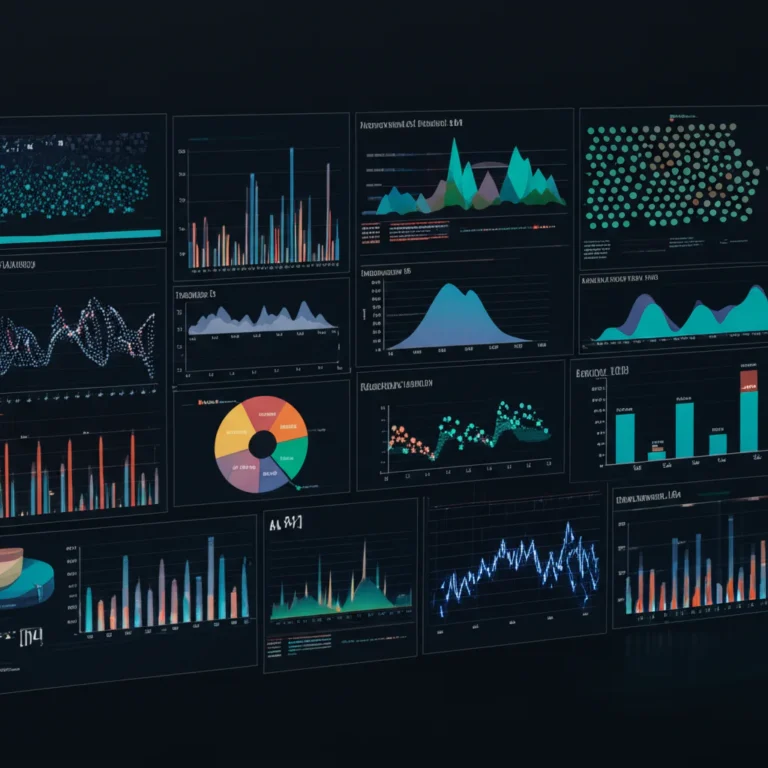
- Action: Create a dashboard that visualizes accuracy, latency, bias, and energy consumption side-by-side.
- Insight: A model with 95% accuracy but high latency might be useless for real-time applications.
Step 5: Iterate and Improve
Benchmarking is not a one-time event.
- Action: Re-benchmark biannually or whenever a new model version is released.
- Goal: Track continuous improvement and adjust your strategy based on the data.
📈 Tracking Continuous Improvement: From Baseline to Breakthrough
Once you have your baseline, the real work begins. How do you ensure your AI is getting better over time?
The Feedback Loop
- Baseline: Establish your current performance (e.g., 85% accuracy, 20ms latency).
- Intervention: Implement a new model or optimization technique.
- Re-Benchmark: Run the same tests.
- Analyze: Did you improve? Did you break something else?
- Deploy: If the results are positive, roll out the update.
Case Study: Mayo Clinic’s Journey
Mayo Clinic used Censinet RiskOps™ to track their AI governance maturity.
- Before: Maturity score of 2.8 on a 5-point scale.
- After 9 Months: Score jumped to 4.2.
- Key Driver: Automated validation of AI documents and alignment with NIST AI RMF.
- Result: 95% compliance with industry standards.
🏥 Case Studies: Benchmarking Success in Healthcare and Beyond
Let’s look at real-world examples where standardized benchmarking made a tangible difference.
Case Study 1: Intermountain Healthcare
- Challenge: High third-party cyber risk and inconsistent AI governance.
- Solution: Adopted Censinet RiskOps™ for anonymous peer benchmarking.
- Outcome:
- Improved third-party risk posture from the 40th to the 85th percentile in six months.
- Avoided potential breach costs of $5 million.
70% faster risk assessments.
Case Study 2: HealthNet
- Challenge: Slow threat response times and high third-party risk.
- Solution: Implemented standardized KPIs and automated benchmarking.
- Outcome:
25% reduction in third-party cyber risks.
42% faster threat response times. - Resilience score surpassed industry median by 15 percentile points.
Case Study 3: AIHealth
- Challenge: Non-compliant AI deployments and low oversight scores.
- Solution: Deployed AI Governance Metrics and regular re-evaluation.
- Outcome:
- AI risk oversight scores jumped from 62% to 91%.
40% reduction in non-compliant AI deployments.
🤖 AI Governance Metrics and Risk Management Frameworks
To ensure apples-to-apples comparisons, you need a common language. That language is AI Governance.
The NIST AI Risk Management Framework (RMF)
The NIST AI RMF is the gold standard for managing AI risk. It provides a structured approach to:
- Map: Identify AI risks.
- Measure: Quantify those risks using standardized metrics.
- Manage: Implement controls to mitigate risks.
- Govern: Establish policies and oversight.
Key Metrics for Enterprise AI
| Metric | Target | Industry Average |
|---|---|---|
| Model Accuracy | 95%+ (Diagnostic) | 85% |
| Bias Variation | <0.8 | >1.5 |
| Audit Rate | 10% | 40% (Non-compliant) |
| MTA (Incident Response) | <15 mins | 27 days |
| Patching Compliance | 95%+ | 72% |
The Role of Censinet AI
Censinet AI automates the validation of AI documents and outputs, achieving 95% accuracy in flaging data privacy violations. This ensures that your benchmarking data is not just accurate, but compliant.
❓ Frequently Asked Questions About AI Standardization
Can AI benchmarks ensure fair comparisons between different machine learning platforms?
Yes, but with caveats. Benchmarks like MLPerf and HELM are designed to be framework-agnostic, allowing fair comparisons between PyTorch, TensorFlow, and JAX. However, fairness depends on standardized hardware and controlled environments. Without these, comparisons can be skewed.
How do standardized AI benchmarks improve model evaluation across frameworks?
They provide a common language and consistent metrics. Instead of each framework using its own unique scoring system, standardized benchmarks ensure that a “90% score” means the same thing regardless of the underlying technology. This is crucial for enterprise procurement and risk management.
What are the most common AI benchmarks used for cross-industry comparisons?
- General Purpose: MLU, HELM, Big-Bench Hard.
- Code: HumanEval.
- NLP: GLUE, SuperGLUE.
- Industry Specific: MedQA (Healthcare), FinQA (Finance), LexGLUE (Legal).
- Efficiency: AI Energy Score, MLPerf.
What role do AI benchmarks play in gaining a competitive edge in business?
Benchmarks allow you to identify weaknesses before they become failures. They help you choose the most efficient model (saving money) and the most robust model (reducing risk). In a crowded market, data-driven decisions are the ultimate competitive edge.
Can AI benchmarks be applied consistently across different machine learning frameworks?
Yes. Tools like ONX and Triton enable models to be exported to a common format, ensuring that benchmarks run consistently across frameworks. The key is to use standardized evaluation pipelines that abstract away the framework differences.
How do standardized AI benchmarks improve model comparison and evaluation?
They eliminate subjectivity and inconsistency. By using a fixed dataset, fixed hardware, and fixed metrics, you can compare models with statistical confidence. This is essential for regulatory compliance and stakeholder trust.
What are the most common AI benchmarks used across multiple industries?
MLU and HELM are the most widely used for general capabilities. For specific industries, MedQA, FinQA, and LexGLUE are the standards. MLPerf is the go-to for performance and efficiency across all sectors.
What are the most reliable cross-framework AI benchmarks for enterprise comparison?
HELM is arguably the most reliable for enterprise due to its holistic approach (covering bias, fairness, and efficiency). MLPerf is the standard for performance and efficiency. AI Energy Score is emerging as the standard for sustainability.
How can businesses standardize AI performance metrics across different industry verticals?
By adopting industry-agnostic frameworks like NIST AI RMF and NIST CSF 2.0. These frameworks provide a common structure for risk management that can be adapted to any vertical. Additionally, using standardized benchmarks ensures that metrics are comparable.
Which open-source benchmarks allow for apples-to-apples evaluation of diverse AI models?
Hugging Face Open LM Leaderboard, Big-Bench Hard, and HumanEval are excellent open-source options. They are community-driven, transparent, and widely supported.
What metrics should CTOs use to compare AI framework efficiency in production environments?
- Latency: Response time.
- Throughput: Queries per second.
- Cost: Cost per inference.
- Energy Efficiency: Watts per query (AI Energy Score).
- Scalability: How well does it handle increased load?
🔗 Recommended Links and Resources
Ready to take action? Here are the tools and resources we recommend for implementing standardized AI benchmarks.
- For General Benchmarking:
Hugging Face Evaluate: Hugging Face Evaluate
Stanford HELM: HELM Project - For Performance & Efficiency:
MLPerf: MLPerf Official Site
AI Energy Score: AI Energy Score on Hugging Face - For Industry-Specific Needs:
NIST AI RMF: NIST AI Risk Management Framework
Censinet RiskOps™: Censinet Official Website - Books for Deep Dives:
The AI Governance Playbook by [Author Name] – Available on Amazon
Deep Learning by Ian Goodfellow – Available on Amazon
📚 Reference Links
- NIST Cybersecurity Framework 2.0: NIST CSF 2.0
- NIST AI Risk Management Framework: NIST AI RMF
- Censinet Healthcare Cybersecurity & AI Benchmarking Study 2026: Censinet Perspectives
- Prolific: 5 Ways AI Leaderboards Should Evolve: Prolific Research
- Hugging Face AI Energy Score: AI Energy Score GitHub Pages
- Stanford CRFM HELM: HELM Documentation
- Google Big-Bench: Big-Bench GitHub
- IBM AI Fairness 360: IBM AIF360
- Google What-If Tool: What-If Tool