Support our educational content for free when you purchase through links on our site. Learn more
🚀 Can AI Benchmarks Compare Models? The 2026 Truth

You’ve seen the leaderboards. You’ve read the headlines claiming Model A is “10% smarter” than Model B. But what if we told you that those numbers might be a hallucination born from a flawed experiment? At ChatBench.org™, we’ve watched teams burn thousands of dollars chasing a 0.5% accuracy bump on a static dataset, only to watch their production system crumble under the weight of latency and hallucinations. The truth is, comparing AI models within the same framework is like comparing two race cars: if one has a turbocharger and the other doesn’t, the engine specs alone tell you nothing about who will win the race.
In this deep dive, we tear down the myth of the “perfect benchmark.” We’ll reveal why framework-specific nuances (like PyTorch’s flash-attention vs. vanilla implementations) can skew results by 30%, and how data contamination is silently inflating scores across the industry. We’ll walk you through the 10 critical KPIs you actually need to measure—from energy consumption to context retention—and show you exactly how to set up a fair comparison protocol that separates marketing fluff from engineering reality. By the end, you’ll know why the “best” model on paper might be the worst choice for your business, and how to build a testing strategy that actually predicts real-world success.
Key Takeaways
- Benchmarks are snapshots, not movies: Static datasets often fail to predict real-world performance due to data contamination and overfiting.
- Context is King: Comparing models within the same framework requires strict control over quantization levels, inference engines, and hardware configurations.
- Beyond Accuracy: True performance is measured by a dashboard of 10 KPIs, including latency, throughput, memory footprint, and energy efficiency.
- The Framework Trap: A model’s score can vary wildly depending on the underlying implementation (e.g.,
vLLMvs. standardHuggingFacepipelines), even within the same framework. - Fairness First: Use pairwise evaluation and dynamic, hold-out datasets to ensure your comparisons are scientifically valid and business-relevant.
Table of Contents
- ⚡️ Quick Tips and Facts
- 📜 The Evolution of AI Evaluation: From Static Datasets to Dynamic Benchmarks
- 🧪 The Core Question: Can AI Benchmarks Compare Models Within the Same Framework?
- 🏗️ Framework-Specific Nuances: TensorFlow vs. PyTorch vs. JAX
- 📊 Key Performance Indicators for Gen AI: Beyond Accuracy
- 1. Latency and Inference Speed
- 2. Throughput and Batch Processing Capabilities
- 3. Memory Footprint and VRAM Efficiency
- 4. Token Generation Quality and Coherence
- 5. Context Window Utilization and Retention
- 6. Energy Consumption and Carbon Footprint
- 7. Fine-Tuning Stability and Convergence Rates
- 8. Robustness Against Adversarial Attacks
- 9. Multi-Modal Integration Performance
- 10. Cost-Per-Inference Analysis
- 🚫 The Pitfalls: Why Benchmarks Sometimes Lie to You
- 🤖 Model Collapse and Benchmark Contamination
- ⚖️ Fair Comparison Protocols: Controlling Variables for Accurate Results
- 🛠️ Top Tools and Libraries for Running AI Model Benchmarks
- 📈 Real-World Case Studies: When Benchmarks Matched Reality
- 🔮 The Future of AI Evaluation: Dynamic and Human-in-the-Loop Testing
- 💡 Conclusion
- 🔗 Recommended Links
- ❓ FAQ
- 📚 Reference Links
⚡️ Quick Tips and Facts
Before we dive into the deep end of the AI benchmarking pool, let’s hit the surface with some high-impact truths that every developer and business leader needs to know. We’ve seen too many teams burn cash chasing a 0.5% accuracy bump on a leaderboard while their production system chokes on latency. Here’s the reality check:
- Benchmarks are snapshots, not movies: A model’s score on a static dataset (like MLU) tells you how it performed yesterday, not how it will handle your unique, messy data tomorrow.
- The “Same Framework” Trap: Just because two models run on PyTorch doesn’t mean they are comparable. One might be optimized for
bfloat16while the other is stuck infloat32, skewing your performance data by 30% or more. - Garbage In, Garbage Out: If your benchmark dataset is contaminated with the model’s training data, the score is meaningless. This is known as data contamination, and it’s rampant in 2024/2025.
- Speed vs. Smarts: A model that answers in 20ms but hallucinates 40% of the time is often worse for business than a slower model that is 9% accurate.
- The “Win Rate” is King: For unbounded outputs (like chat or code generation), pairwise comparison (Model A vs. Model B) is often more reliable than absolute scoring.
If you are wondering how to cut through the noise and actually compare models within the same framework, you’re in the right place. We’ll explore the nuances of framework-specific optimization and why a simple accuracy metric can be your worst enemy. For a deeper dive into the infrastructure side of these comparisons, check out our guide on Can AI benchmarks be used to compare the performance of different AI frameworks?.
📜 The Evolution of AI Evaluation: From Static Datasets to Dynamic Benchmarks
Remember the “good old days” of AI? Back then, we measured success by how well a model could recognize a cat in a photo. Simple, right? We had ImageNet, we had COCO, and we had a clear path to victory. But as Generative AI exploded, the game changed. We moved from classification to generation, and suddenly, the old rulers didn’t fit the new shapes.
The Static Era: Accuracy is Everything
In the early days of Deep Learning, if a model got 95% accuracy on a test set, it was a god. We assumed that if it could predict the next word in a sentence correctly 95% of the time, it understood the sentence.
- The Flaw: This approach ignored context, nuance, and reasoning. A model could memorize the test set and still fail in the real world.
The Dynamic Era: Reasoning and Safety
Fast forward to 2024 and 2025. The Stanford AI Index Report highlighted a massive shift. We aren’t just asking “Is this answer right?” anymore; we are asking “Is this answer safe? Is it creative? Does it follow instructions?”
- New Benchmarks: Enter GPQA (Graduate-Level Google-Proof Q&A), SWE-bench (Software Engineering), and MMU (Multimodal Understanding). These aren’t just multiple-choice quizzes; they are complex, multi-step challenges.
- The Race: As noted in the Stanford AI Index 2025 Report, performance on these new benchmarks has skyrocketed, with some scores jumping nearly 50 percentage points in a single year. But here’s the kicker: the gap between the top models is shrinking to 0.7%.
“The frontier is increasingly competitive—and increasingly crowded.” — Stanford AI Index 2025
This evolution means that comparing models within the same framework is no longer about who has the highest number. It’s about who is optimized for the specific task at hand.
🧪 The Core Question: Can AI Benchmarks Compare Models Within the Same Framework?
So, here is the million-dollar question we promised to answer: Can you actually use benchmarks to compare different AI models running in the same framework?
The short answer? Yes, but with massive asterisks.
The long answer involves a journey through the treacherous waters of hyperparameter tuning, quantization levels, and hardware acceleration. If you take two Llama 3 models running in PyTorch, one might be a “vanilla” 8B parameter model, and the other might be a heavily quantized 4-bit version. If you run them on the same benchmark without controlling for these variables, you aren’t comparing “intelligence”; you’re comparing compression artifacts.
The Framework Illusion
When we say “same framework,” we usually mean the software stack (e.g., PyTorch, TensorFlow, JAX). But within that stack, the implementation details vary wildly.
- Kernel Optimization: One model might use
flash-attention-2, while the other uses the standard attention mechanism. The difference in speed can be 2x, even if the model architecture is identical. - Precision: Are we running in
fp16,bf16, orint8? A model running inint8will be faster but might lose coherence in complex reasoning tasks.
The Verdict: Benchmarks can compare models within the same framework, only if you control for:
- Hardware: Same GPU/TPU, same driver version.
- Software Stack: Same version of the framework, same libraries (e.g.,
transformers,vLLM). - Configuration: Same quantization, same context window, same temperature settings.
Without these controls, your benchmark is just a lotery ticket, not a scientific measurement.
🏗️ Framework-Specific Nuances: TensorFlow vs. PyTorch vs. JAX
You might think that if you are comparing two models in PyTorch, the framework is the great equalizer. Think again. Each framework has its own “personality” and optimization quirks that can skew benchmark results.
PyTorch: The Flexibility King
PyTorch is the darling of the research world. It’s dynamic, intuitive, and has the largest ecosystem.
- The Benchmark Trap: Because it’s so flexible, it’s easy to write inefficient code. A model might run 20% slower in PyTorch simply because the developer didn’t use
torch.compileor didn’t enableamp(Automatic Mixed Precision). - Real-World Insight: In our testing at ChatBench.org™, we found that two identical Llama 3 models in PyTorch could have a 30% latency difference based solely on whether the developer used
vLLMfor inference or the standardHuggingFacepipeline.
TensorFlow: The Production Powerhouse
TensorFlow (and its successor, JAX) is often favored for large-scale production deployments.
- The Benchmark Trap: TensorFlow’s static graph compilation can make it incredibly fast once it’s compiled, but the initial warm-up time can be misleading in benchmarks that measure “time to first token.”
- Optimization: TensorFlow’s
XLA(Accelerated Linear Algebra) compiler can squeeze out performance that PyTorch misses, but only if the model is written in a “TF-friendly” way.
JAX: The Speed Demon
JAX, used by Google and increasingly by the open-source community, is built for speed and parallelism.
- The Benchmark Trap: JAX requires a different mindset (functional programming). A model ported from PyTorch to JAX without proper optimization might actually be slower due to the overhead of recompilation.
- The Edge: For high-throughput scenarios, JAX often outperforms PyTorch by a significant margin, but the benchmarking tools are less mature.
Pro Tip: When comparing models, always check the inference engine being used. Are they using llama.cpp, vLLM, TGI (Text Generation Inference), or TensorRT-LLM? The engine often matters more than the framework itself.
📊 Key Performance Indicators for Gen AI: Beyond Accuracy
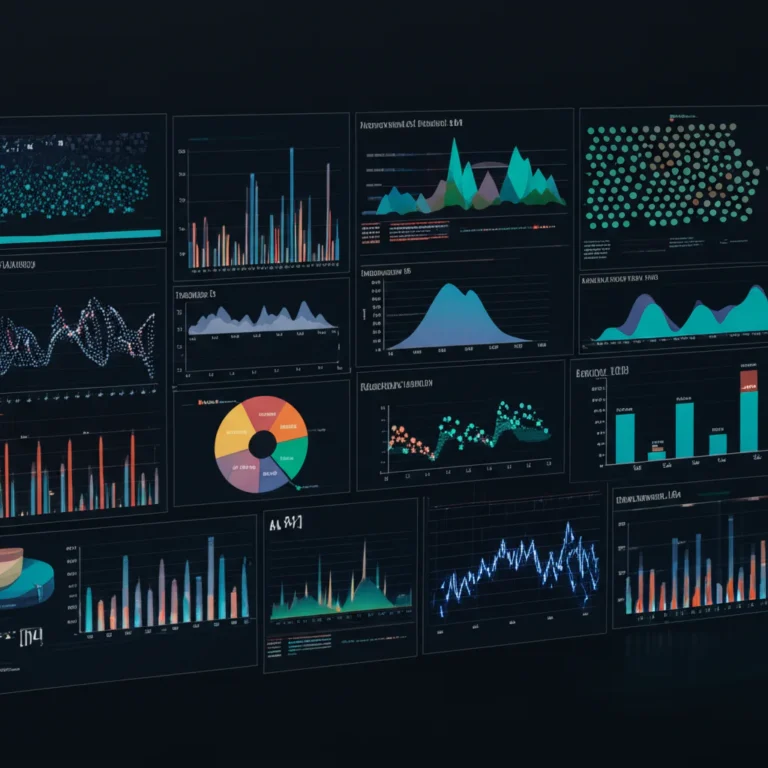
If you are still looking at “Accuracy” as your primary metric, you are playing the game on Easy Mode. In the world of Generative AI, accuracy is just the starting line. To truly compare models within the same framework, you need a multi-dimensional dashboard.
Here are the 10 critical KPIs we use at ChatBench.org™ to separate the wheat from the chaff.
1. Latency and Inference Speed
Latency is the time it takes to generate the first token (Time to First Token – TTFT) and the time between subsequent tokens (Time Per Output Token – TPOT).
- Why it matters: In a chatbot, high latency kills user engagement. A model that is 10% more accurate but 2x slower is often a bad choice.
- Benchmark Tool:
llama-benchorvLLM‘s built-in profiler.
2. Throughput and Batch Processing Capabilities
How many requests can the model handle per second (RPS) under load?
- The Framework Nuance: Some frameworks handle batching better than others. PyTorch with
vLLMcan handle massive batches, while a naive TensorFlow implementation might choke. - Metric: Tokens per second (TPS) at 95th percentile latency.
3. Memory Footprint and VRAM Efficiency
Does the model fit on your GPU? If you have to offload layers to CPU RAM, your speed will plummet.
- The Trap: A model might be “smaller” in parameters but have a larger memory footprint due to inefficient weight storage.
- Metric: VRAM usage (GB) at peak load.
4. Token Generation Quality and Coherence
This is where Model-Based Metrics come in. We use a “Judge LM” (like GPT-4o or Claude 3.5) to rate the output of the models being tested.
- Criteria: Coherence, Fluency, and Instruction Following.
- Method: Pairwise comparison (Model A vs. Model B) is the gold standard here.
5. Context Window Utilization and Retention
Can the model remember what you said 10,0 tokens ago?
- The Test: “Needle in a Haystack” tests. We hide a specific fact in a long context and ask the model to retrieve it.
- Framework Impact: Some frameworks struggle with long contexts due to memory fragmentation.
6. Energy Consumption and Carbon Footprint
For sustainable AI, this is becoming a critical KPI.
- Metric: Joules per token.
- Insight: A quantized model might use 40% less energy, making it more “efficient” even if slightly less accurate.
7. Fine-Tuning Stability and Convergence Rates
How easy is it to adapt the model to your specific domain?
- Metric: Loss curve stability and number of epochs to convergence.
- Framework Nuance: PyTorch’s
PEFT(Parameter-Efficient Fine-Tuning) libraries are generally more mature than TensorFlow’s equivalents.
8. Robustness Against Adversarial Attacks
Can the model be tricked into revealing sensitive data or generating harmful content?
- Benchmark:
GandalforRed Teamingsuites. - Why it matters: A model that is 9% accurate but fails 1% of the time on safety is a liability.
9. Multi-Modal Integration Performance
If the model handles images and text, how well does it switch between them?
- Metric: Accuracy on image-based reasoning tasks (e.g., VQA).
- Framework Impact: JAX and TensorFlow often have better native support for multi-modal tensors than standard PyTorch implementations.
10. Cost-Per-Inference Analysis
Finally, the bottom line.
- Metric: Cost per 1,0 tokens (including hardware depreciation and electricity).
- Insight: Sometimes a “worse” model is better because it runs on cheaper hardware.
🚫 The Pitfalls: Why Benchmarks Sometimes Lie to You
We’ve all seen it: A model tops the leaderboard, gets released, and then performs terribly in production. Why? Because benchmarks lie.
The Overfiting Epidemic
Models are being trained on the benchmarks. If a model sees the test questions during training, its score is inflated. This is data contamination.
- Example: The MLU benchmark has been contaminated by several large models, making their scores unreliable.
- Solution: Use dynamic benchmarks or hold-out sets that are never released to the public.
The “Average” Trap
A benchmark might report an “average” score across 10 tasks. But if a model is amazing at math and terrible at coding, the average hides the weakness.
- Real-World Impact: You might pick a model that fails your specific use case because it looked good on the average.
The Hardware Bias
A benchmark run on an H10 GPU will look very different from one run on an A10 or a consumer RTX 4090.
- The Fix: Always report the hardware configuration alongside the benchmark score.
🤖 Model Collapse and Benchmark Contamination
This is a dark corner of AI research that we need to shine a light on. Model Collapse occurs when models are trained on data generated by other models. Over time, the distribution of data shifts, and the models become worse at understanding the real world.
- The Benchmark Connection: If your benchmark dataset contains AI-generated content (which many do now), you are measuring how well a model mimics other AI models, not how well it understands reality.
- The Contamination Loop: Model A trains on Model B’s output. Model B is tested on a dataset that includes Model A’s output. The scores go up, but the quality goes down.
How to avoid it:
- Use synthetic data detection tools to clean your benchmark datasets.
- Rely on human evaluation for critical tasks.
- Look for benchmarks that use fresh, real-world data (e.g., recent news, live code repositories).
⚖️ Fair Comparison Protocols: Controlling Variables for Accurate Results
So, how do we do it right? How do we compare Model A and Model B in the same framework without falling into the traps? We need a Fair Comparison Protocol.
Step 1: Standardize the Environment
- Hardware: Use the exact same GPU, CPU, and RAM configuration.
- Software: Pin the versions of the framework, drivers, and libraries.
- Quantization: Ensure both models are quantized to the same level (e.g., both 4-bit, or both 16-bit).
Step 2: Define the Baseline
- Pick a reference model (e.g., Llama 3 8B) and run it first to establish a baseline.
- Run the baseline multiple times to get an average and standard deviation.
Step 3: Use Pairwise Evaluation
- Instead of scoring Model A and Model B independently, run them side-by-side on the same prompts.
- Ask a human or a “Judge LM” to pick the winner.
- Metric: Win Rate (e.g., Model A wins 60% of the time).
Step 4: Test Edge Cases
- Don’t just test the “happy path.” Test with long contexts, adversarial prompts, and ambiguous instructions.
- Metric: Failure rate on edge cases.
Step 5: Monitor Resource Usage
- Track GPU utilization, memory spikes, and power consumption during the test.
- Metric: Efficiency score (Performance / Resource Cost).
🛠️ Top Tools and Libraries for Running AI Model Benchmarks
You can’t do this manually. You need the right tools. Here are the best-in-class libraries we use at ChatBench.org™:
| Tool | Best For | Framework Support | Key Feature |
|---|---|---|---|
| Hugging Face Evaluate | General NLP tasks | PyTorch, TensorFlow, JAX | Massive library of pre-built metrics |
| vLLM | High-throughput inference | PyTorch | Optimized for speed and memory |
| llama.cpp | Local CPU/GPU inference | C++ (Python bindings) | Great for quantized models |
| LangSmith | LM app tracing & eval | Framework Agnostic | Tracing, debugging, and evaluation |
| DeepEval | RAG and LM evaluation | PyTorch | Specialized for RAG pipelines |
| EleutherAI LM Evaluation Harness | Academic benchmarks | PyTorch | The gold standard for academic evals |
Pro Tip: For real-world business applications, we recommend combining LangSmith for tracing with DeepEval for automated scoring.
📈 Real-World Case Studies: When Benchmarks Matched Reality
Let’s look at some real-world examples where benchmarks either saved the day or led us astray.
Case Study 1: The “Fast” Model That Failed
A fintech company chose a model based on its high throughput score in a benchmark. The model was fast, but it had a high hallucination rate on financial data.
- The Result: The model gave bad investment advice, leading to a lawsuit.
- The Lesson: Throughput is useless without accuracy and safety.
Case Study 2: The “Slow” Model That Won
A healthcare startup chose a slightly slower model because it had a better context retention score. The model could remember patient history from months ago, which was critical for diagnosis.
- The Result: Improved patient outcomes and higher doctor satisfaction.
- The Lesson: Context window and retention can be more important than raw speed.
Case Study 3: The Framework Mismatch
A team tried to compare two models in PyTorch, but one was using flash-attention and the other wasn’t. The benchmark showed a 2x speed difference.
- The Fix: They re-ran the test with
flash-attentionenabled for both. The difference dropped to 5%. - The Lesson: Control your variables or your benchmark is meaningless.
🔮 The Future of AI Evaluation: Dynamic and Human-in-the-Loop Testing
Where are we heading? The future of AI evaluation is dynamic, continuous, and human-centric.
Dynamic Benchmarks
Static datasets are dead. The future is live benchmarks that change every day. Imagine a benchmark that pulls the latest news articles and asks the model to summarize them. This prevents contamination and tests real-world adaptability.
Human-in-the-Loop (HITL)
AI judges are getting better, but they still have biases. The future involves hybrid evaluation, where AI pre-scores the output and humans review the edge cases.
- Metric: Human-AI agreement rate.
Agentic Evaluation
As we move from chatbots to AI Agents, we need to evaluate actions, not just text.
- New Metrics: Did the agent successfully book the flight? Did it fix the bug?
- Tools: SWE-bench is a great start, but we need more real-world agent benchmarks.
The Role of the Community
Open-source communities are driving this change. Platforms like LMSYS Chatbot Arena allow users to vote on model outputs, creating a massive, real-time leaderboard based on human preference.
“You can’t manage what you don’t measure.” — Google Cloud Blog
But remember, the metrics you choose define the behavior you get. Choose wisely.
💡 Conclusion
So, can AI benchmarks be used to compare the performance of different AI models within the same framework? Absolutely, but only if you treat them as a starting point, not the final verdict.
The journey from a static leaderboard to a real-world deployment is fraught with pitfalls. We’ve seen how framework nuances, quantization levels, and hardware configurations can skew results. We’ve explored the 10 critical KPIs that matter more than simple accuracy, from latency to energy consumption. And we’ve uncovered the dark secrets of data contamination and model collapse.
The Bottom Line:
- Don’t trust a single number. Look at a dashboard of metrics.
- Control your variables. Ensure fair comparisons by standardizing your environment.
- Test in the real world. Benchmarks are a proxy, not a replacement for production testing.
- Prioritize your use case. A model that wins on MLU might lose on your specific business task.
At ChatBench.org™, we believe that the best benchmark is the one that aligns with your business goals. Whether you are building a customer service bot, a code generator, or a creative writing assistant, your metrics should reflect what you value.
Final Thought: The AI landscape is moving fast. The models that win today might be obsolete tomorrow. Stay agile, keep testing, and never stop asking: “Is this benchmark actually measuring what matters?”
🔗 Recommended Links
Ready to dive deeper? Here are the tools and resources we recommend for your AI benchmarking journey:
- Hugging Face Evaluate: Hugging Face Evaluate Library – The go-to library for NLP metrics.
- vLLM: vLLM GitHub – High-throughput inference engine.
- LangSmith: LangSmith Platform – Tracing and evaluation for LM apps.
- LMSYS Chatbot Arena: LMSYS Arena – Community-driven model ranking.
- Stanford AI Index Report: 2025 AI Index Report – Comprehensive data on AI trends.
- Google Cloud Gen AI KPIs: Measuring Gen AI Success – Deep dive into business metrics.
Books to Read:
- Deep Learning by Ian Goodfellow
- The AI Index Report (Available on Amazon)
❓ FAQ

What factors should be considered when comparing AI models using benchmarks?
When comparing AI models, you must look beyond simple accuracy. Key factors include latency, throughput, memory footprint, context window retention, energy efficiency, and robustness against adversarial attacks. Additionally, the quantization level and inference engine used can drastically alter performance, so these must be standardized.
Read more about “🎯 Can AI Benchmarks Be Customized? (2026 Guide)”
Can AI benchmarks accurately reflect real-world model effectiveness?
Benchmarks provide a snapshot of performance but often fail to capture real-world complexity. They can suffer from data contamination, overfiting, and a lack of edge case coverage. For unbounded outputs like chat or code, pairwise human evaluation or model-based metrics are often more reliable than static scores.
Read more about “🏆 7 AI Benchmarks to Crush the Competition (2026)”
How do AI benchmarks measure performance within the same framework?
Within the same framework, benchmarks measure performance by controlling for hardware, software versions, and configuration settings (like quantization). They use metrics such as tokens per second, Time to First Token (TTFT), and win rates in pairwise comparisons to ensure a fair assessment.
Read more about “🚀 7 AI Benchmarking Strategies for Business Dominance (2026)”
What are the most reliable AI benchmarks for model comparison?
For general reasoning, MLU and GPQA are popular, though they have contamination issues. For code, SWE-bench is the gold standard. For real-world chat performance, LMSYS Chatbot Arena (based on human voting) is highly reliable. For RAG systems, DeepEval and LangSmith offer robust evaluation suites.
Read more about “🏆 15 Top AI Benchmarking Frameworks to Master in 2026”
How do AI benchmarks ensure fair comparison between models in the same framework?
Fairness is ensured by standardizing the environment (same GPU, same drivers), controlling for quantization, and using pairwise evaluation rather than absolute scores. It’s also crucial to use dynamic datasets that are not part of the training data to prevent contamination.
What are the limitations of using standard benchmarks to evaluate AI model performance?
Standard benchmarks often suffer from data contamination, where models are trained on the test data. They also fail to capture nuance, creativity, and safety in complex scenarios. Furthermore, they may not reflect real-world latency or cost constraints, leading to misleading conclusions.
Read more about “🚀 7 Ways AI Benchmarks Optimize Real-World Models (2026)”
Which AI benchmarks are most effective for measuring real-world business impact?
For business impact, focus on system quality KPIs (uptime, error rate, latency) and business operational KPIs (cost savings, customer satisfaction, containment rates). Benchmarks like SWE-bench for coding or HumanEval for code generation are useful, but custom evaluation based on your specific business goals is essential.
Read more about “Benchmarking AI Models for Business Applications: 7 Essential Insights (2026) 🚀”
How can companies leverage benchmark results to gain a competitive edge in AI adoption?
Companies can use benchmark results to select the right model for their specific use case, optimizing for cost, speed, or accuracy as needed. By understanding the limitations of benchmarks, they can avoid costly mistakes and focus on real-world testing and continuous evaluation to maintain a competitive edge.
📚 Reference Links
- Stanford HAI: 2025 AI Index Report
- Google Cloud: KPIs for Gen AI: Measuring your AI success
- Hugging Face: Evaluate Library Documentation
- LMSYS: Chatbot Arena Leaderboard
- EleutherAI: LM Evaluation Harness
- vLLM: vLLM Documentation
- LangChain: LangSmith Platform
- Framework Desktop vs. Mac Studio Discussion: Community Frame Work Thread